Supporting resources
13 November 2025
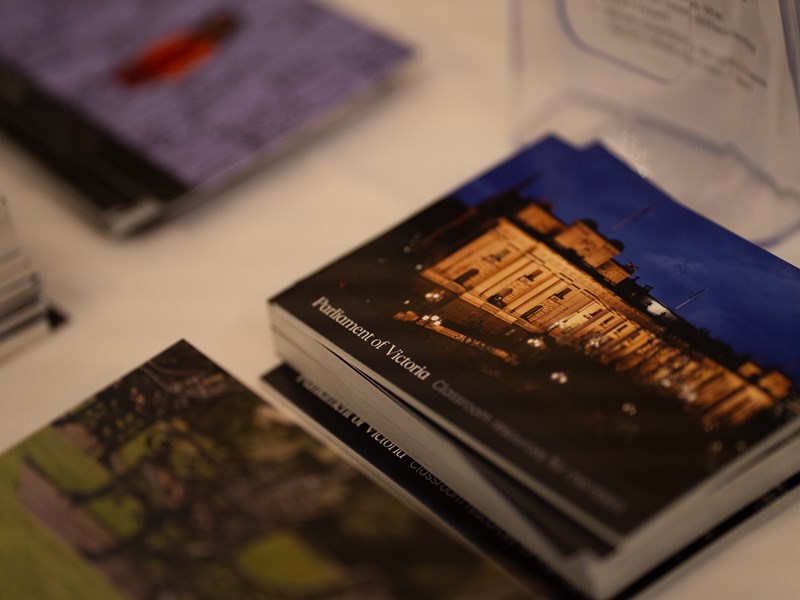
Explore a range of general resources to support your civics and citizenship classroom including graphic organisers, thinking routines, literacy strategies and more.
The Supporting resources are useful for a range of activities in the civics and citizenship classroom. It includes a range of pedagogical approaches, graphic organisers, ways to access and make the most of parliament publications, and some cards to prompt thinking and reflection. Also included is a list of some useful thinking routines from Harvard Project Zero and some additional material if you're visiting Parliament House.
Teaching support
Jigsaw groupings
Jigsaw groupings is a cooperative learning strategy that helps students to synthesise ideas from a range of soures and develop deep understanding of a topic.
Jigsaw groupingsChallenging conversations
This resource provides strategies that are flexible and adaptable, taking into account teaching context, the age of the students, appropriateness of the topic, the depth of discussion, as well as school and community expectations.
A guide to challenging conversationsUsing case studies
Case studies are an excellent way of bringing real-world examples into the classroom. This resource looks at to effectively engage with both short-form and more complex case studies.
Using case studiesAccessing parliament resources
Searching Hansard
Hansard is the official report of the proceedings of the Parliament of Victoria from 1856 to the present day. Hansard contains records of parliamentary debate, question time, member’s statements, constituency questions—any official parliamentary activity.
How to search HansardLibrary publications
The Parliamentary Library produces research papers on matters of importance to Members. Research papers dating back to the 59th Parliament are available online.
Research papersCreating case studies
Case studies are effective educational tools that can bring curriculum content to life by linking it with real-world events and diverse perspectives. Below is a practical guide for developing and applying case studies, along with recommended formats, sources, and activities for classroom use.
Creating case studiesLiteracy support
Parliamentary glossary
The Parliamentary glossary includes definitions for key roles in parliament as well as key processes.
Parliamentary glossaryLiteracy strategies
Explore interactive and collaborative approaches to discipline-based literacy that aim to build deep comprehension skills and critical thinking.
Literacy strategiesGraphic organisers
Generating questions
Students can use the 'Question matrix' to generate questions that can be used to support discussion and/or researching topics of interest.
K-W-L Chart
A K-W-L Chart tracks what students know (K) wants to know (W) and have learnt (L) about a topic. This can be used before, during and after research projects.
K-W-L ChartNote taking
A note taking template helps students to read and extract the most important information from a text, and incorporate into their work in thier own words.
Note taking templateExploring civics cards
Decision making cards
The glossary includes definitions for key roles in parliament as well as key processes.
Decision making cardsAction and influence cards
The cards can be used to prompt students to think about the different types of actions that they could take to create change and can be used with the planning and evaluating change activities from the Action and Influence teaching guide.
Action and influence cardsActivities
Civic conversation starters
The cards can be used to promote conversation, explore misconceptions and tease out students' understanding of civics and citizenship.
Civic conversation startersThinking routines
See, think, wonder
This routine encourages students to make observations and consider different ways of interpreting those observations
See, think, wonderSee, wonder, connect x2
This routine encourages student to look closely at things and make connections to other things, and explore the interconnectedness of knowledge
See, wonder, connect x2Unveiling stories
This routine helps students investigate the layers of meaning in images and texts, exploring how representation works in the news
Unveiling storiesI used to think … but now I think
One of the core routines, this one uses the sentance stems to prompt students to reflect on what they have learnt and how their thinking might have changed
I used to think … but now I thinkParts, purposes, complexities
This routine encourages students to examine the components of an object or system and explore how they may be connected.
Parts, purposes, complexitiesVisiting Parliament House
School experiences
There are a number of free experiences for school groups that link to relevant sections of the Civics and Citizenship and Legal Studies curriculum. Take a tour of Parliament House with your class, take part in a role-play to learn the parliamentary process, or connect with our Tours and Outreach Officers virtually with an online incursion.
School experiencesSocial stories
The Parliament House social stories guide visitors through what to expect on their visit, from the front steps, the security check-in, visiting the chambers and leaving the building.
One story is written for visitors of all ages while the other is for school visits, which includes additional information about things such as our Parliamentary role plays.
Social storiesCivic discovery walk
Make the most of your visit to Parliament House and take your class beyond Spring Street.
Civic discovery walk