Victoria expands legal definition of family violence
23 February 2026

Reforms passed by the Victorian Parliament have broadened the legal definition of family violence to now capture behaviours such as stalking and systems abuse.
The Justice Legislation Amendment (Family Violence, Stalking and Other Matters) Bill 2025, aimed at improving protections for victim‑survivors and increasing accountability for perpetrators, received Royal Assent on 10 February 2026.
Under the reforms, family violence intervention orders can now run for longer periods, stalking offences have been clarified, protections for witnesses bolstered, and new mechanisms introduced to reduce the misidentification of victim‑survivors.
In her second reading speech to the Legislative Council, Minister for Children Lizzie Blandthorn highlighted the scale of the issue.
‘Family violence happens across all communities, in all kinds of relationships and all too often. In 2023, Victoria Police responded to 94,170 family violence incidents – one every 6 minutes – with nearly three quarters of victims being women and girls,’ she said.
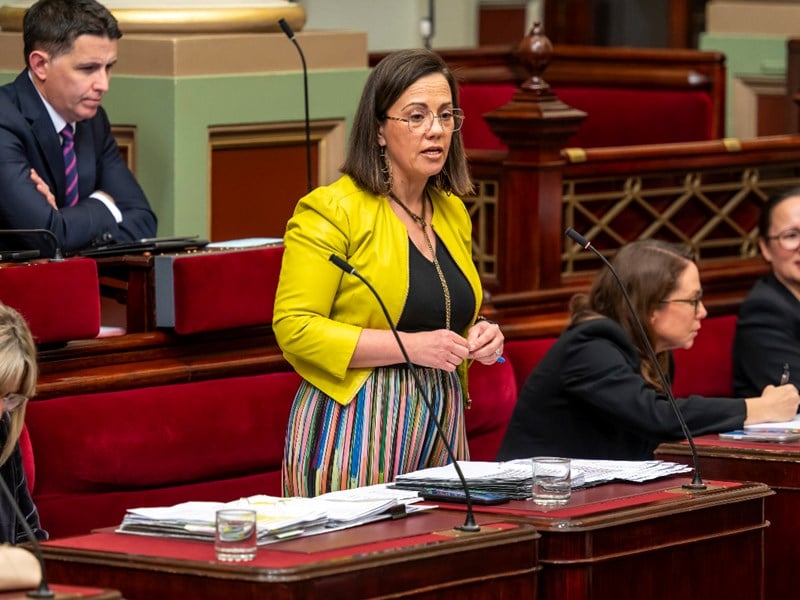
Ms Blandthorn noted that the legislation prioritises the safety of victim-survivors as the paramount consideration for all the reforms, while appropriately balancing the rights of respondents.
A key change is the introduction of a default two-year family violence intervention order, aimed at reducing repeated court appearances. The legislation also explicitly recognises stalking and harm to animals as forms of family violence.
Western Victoria MP Jacinta Ermacora indicated that the updated approach to stalking reflects how the behaviour manifests in real life.
‘Historically the definition of ‘stalking’ has been very codified and very tight and difficult to prove, so this enables the conduct to be assessed as a pattern of behaviour designed to cause fear and stress or harm,’ she said.
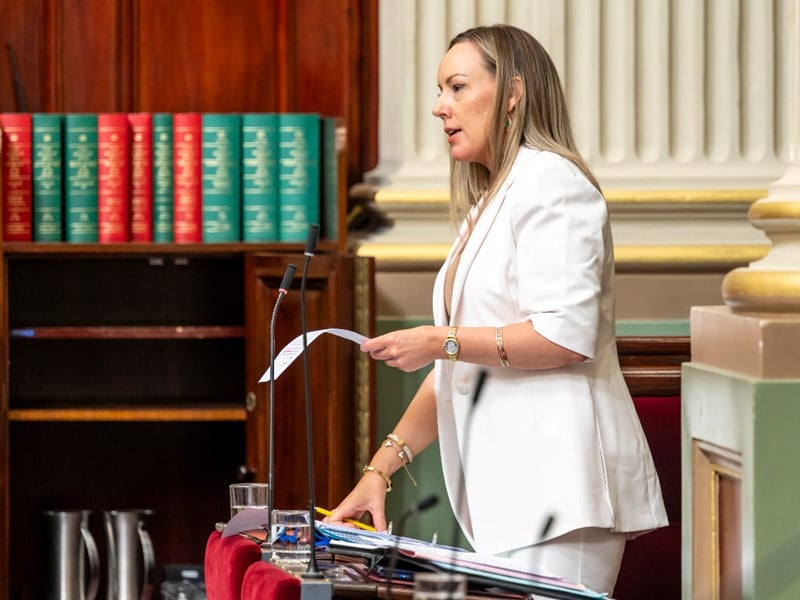
The bill also implements recommendations from the Victorian Law Reform Commission enabling courts to issue interim personal safety intervention orders and clarifying the elements of the stalking offence.
While supporting the legislation, Eastern Victoria MP Renee Heath argued the reforms did not go far enough.
‘This bill is a very partial and selective response that only responds to two of the 45 recommendations of the Victorian Law Reform Commission’s report on its inquiry into stalking, yet it is still being presented to the community as a serious response to family violence and stalking in Victoria,’ she said.
Southern Metropolitan MP Katherine Copsey stressed that legislative reform alone will not solve the problem.
‘Legislation can set better rules for courts, but culture, practice, training and accountability, particularly in first response policing, must all improve as well,’ she said.
Northern Metropolitan MP Anasina Gray‑Barberio emphasised the need for responses that genuinely meet the needs of those most affected.
‘Equality assumes everyone is treated the same regardless of their need and situation. Equity recognises that women are treated differently depending on their need and situation and therefore requires responses tailored to those needs and situations,’ she said.
‘If we are serious about prevention and protection, equity must be at the centre of our policies and responses.’