What is Victoria 2050
Victoria 2050 is a new scenario-based learning experience, that brings together parliamentary committee reports, ABS population data and scientific thinking through decision making and design challenges. Through the scenarios students engage in:
- evidence-based decision making
- hypothesising
- innovative problem solving
- critical and creative thinking
The resource is designed to encourage curiosity, exploration of intended and unintended consequences, while demonstrating how systems are interconnected.
Each of the assets are available to download separately from the lists below. This is to allow for flexibility, only downloading and printing the sections that will be most useful to the classroom. The set-up and implementation of the Victoria 2050 experience is detailed in the Teaching support material.
Read more about the design and structure of Victoria 2050 below.
Teaching support
Victoria 2050 teaching guide
The teaching guide provides an over of Victoria 2050, as well as recommendations for setting up and running the experience.
Victoria 2050 teaching guideVictoria 2050 PPT
The PowerPoint provides instructions for the key activities throughout Victoria 2050.
Victoria 2050 PowerPointLearning, options & extensions
This teacher guide provides advice on what learning outcomes can be achieved through Victoria 2050, how to use it flexibily to meet your classes needs and opportunities for extension.
Learning, options & extensionVictoria 2050 core cards
Political party cards
These cards help to place students in political parties and guide their decisions when proposing priority areas.
Political party cardsPriority area cards
The Priority area cards provide details about why the area is important and the impact of population growth on the area.
Priority area cardsHigh priority design cards
These cards can be used for the design challenge for areas that have been determined to be a high priority in the passing of a bill process.
High priority design cardsLow priority design cards
These Low priority design cards can be used for the design challenge for areas that have been determined to be a lower priority in the passing of a bill process.
Low priority design cardsSupporting material
Script: Passing a bill
There are two versions of the script. The teacher script includes the key phrases, along with instructions and explanations. The student script can be handed out to students with key roles to help guide their involvement.
Download teacher scriptPriority record sheet
This can be used to help students make decisions about which areas are of high or low priority, and to record their evidence and reasoning.
Priority record sheetPriority area tracking
This document includes all priority areas large enough to display at the front of a classroom, and can be used to track which areas are up for debate at different stages of passing a bill.
Priority area trackingDesign challenge and reflection
This document guides students through engaging with the design challenge instructions, using evidence in their design and reflecting on the consequences of the design.
Design challenge and reflection sheetOptional & extension cards
Electorate cards
The Electorate cards can be used to create more complex scenarios where students must also consider the needs of the electorate they represent.
Electorate cardsPopulation scenarios
The Population scenarios can be used for the design challenge to add an extra level of complexity, as students consider the impacts of population growth on their allocated area as well as the people from a particular location.
Population scenarios
Designing Victoria 2050
Victoria 2050 was created using the findings of over 20 parliamentary committee inquiries that identified some of the challenges Victoria will potentially face in relation to growing populations over the next couple of decades.
These reports and references were used to identify fourteen key areas that are important when considering the future of Victoria, as well as produce a list of data and evidence students are able to draw on throughout the activities.
Victoria 2050 encourages young people to respond to the challenge of setting priorities with finite resources, and to consider the need for future-focused, sustainable solutions.
The structure of Victoria 2050
The scenario is split into two parts:
- Making decisions using the parliamentary process of passing a bill
- A future-focused, design-thinking challenge
The parliamentary process
The first part of Victoria 2050 asks students to prioritise a list of fourteen key areas for the future, acknowledging that all areas are important but decisions must be made given limited resources.
Students are given fictional electorates to represent and form their own political parties. Each party decides on their order of priorities, before the government party introduces the Victoria 2050 Bill. The students follow Legislative Assembly and Council processes, including a Committee of the Whole for amendments, before voting on the final bill.
Future focused design challenge
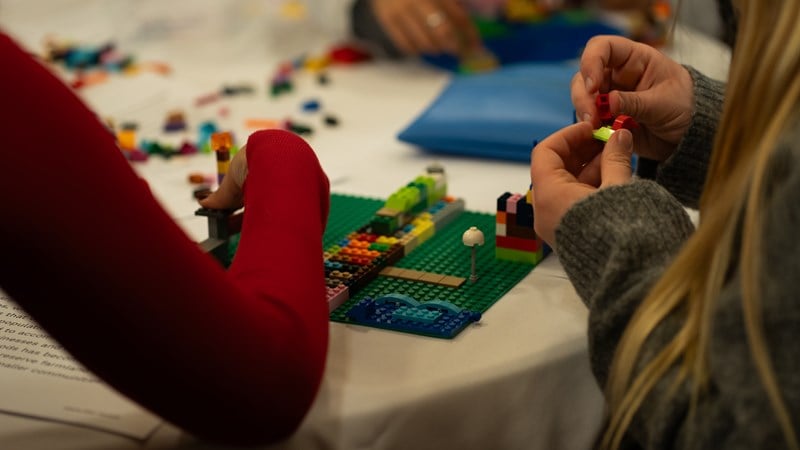
Based on the priorities, determined in the parliamentary process stage, students complete one of two future-focused design challenges for each of the key areas.
Each design challenge asks students to consider a future problem that Victoria may face as a result of growing populations by proposing innovative solutions. Different amounts of information and resources are provided depending on the challenge, with prompts to help students consider their problem from a new angle or represent their solution in a different way. For instance, representing their ideas via:
- Magazine cover
- Restaurant menu
- Billboard
- Wayfinding signs
- Book covers