Legislative Assembly Legal and Social Issues Committee
Inquiry into the recruitment methods and impacts of cults and organised fringe groups
Report Tabled
Report presented to Parliament
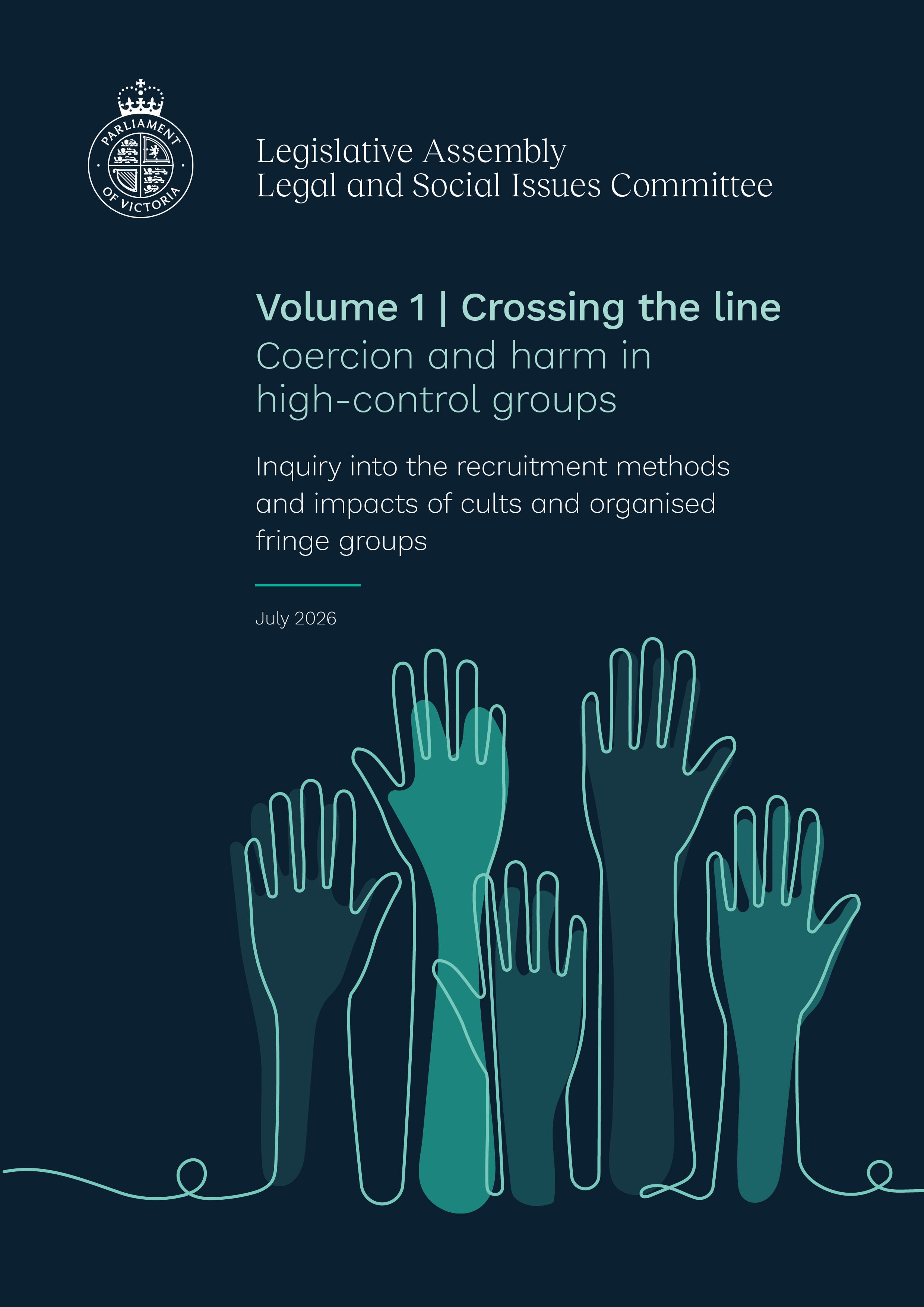
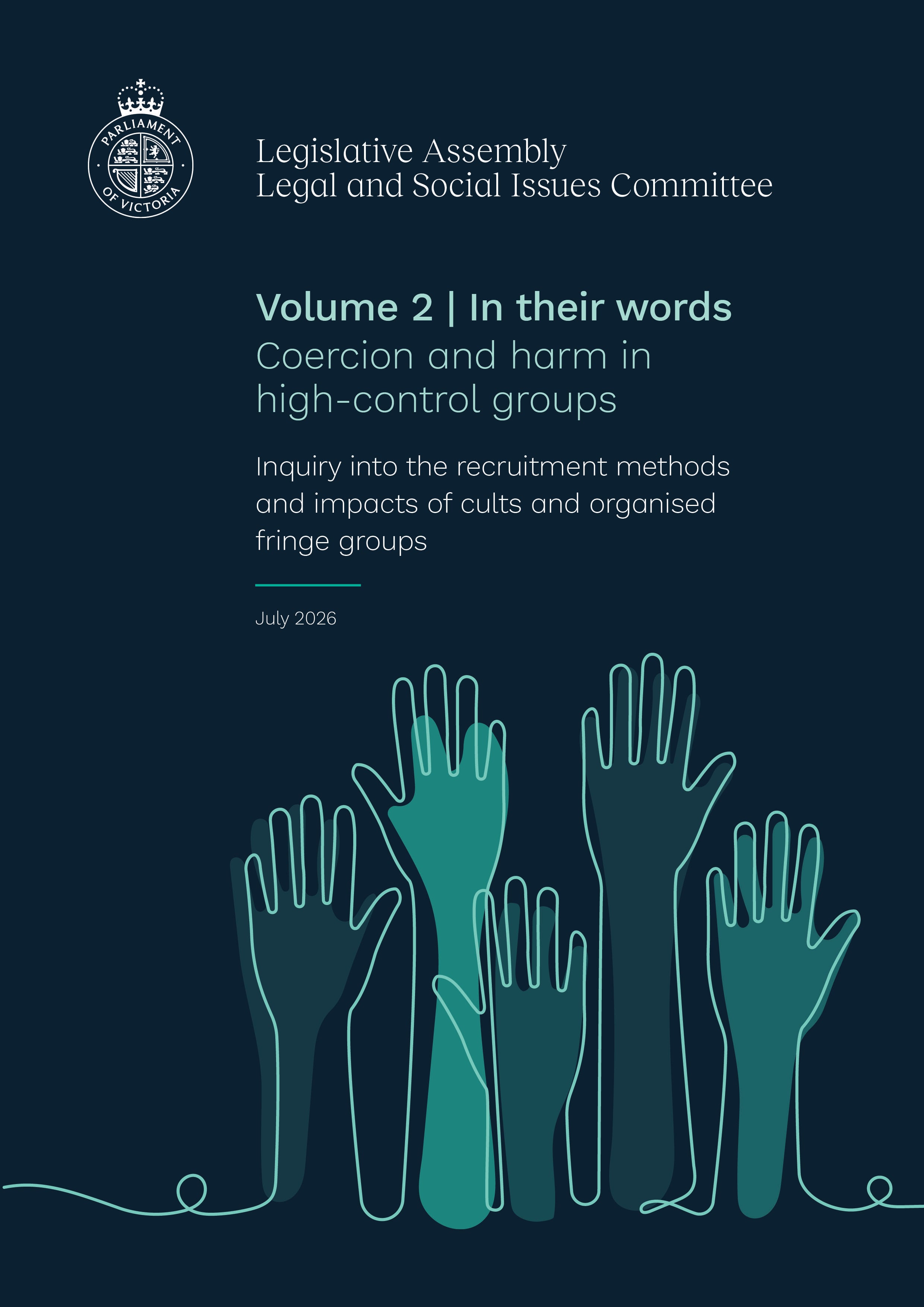
Tabled in the Legislative Assembly on 29 July 2026, the report makes 98 findings and 39 recommendations. The final report, Coercion and harm in high control groups, is in two volumes:
- Volume 1: Crossing the line examines how coercive high-control groups operate and their impacts, and sets out the Committee’s recommendations to the Victorian Government.
- Volume 2: In their words presents the experiences of people directly affected by coercive high-control groups, illustrating the recruitment methods, impacts and patterns of behaviour.
Recommendations across both volumes focus on how the Victorian Government can achieve a behaviour-based approach to legal and policy reform that addresses the impacts of coercive high-control groups. This includes considering improvements to legislation, supporting services to better identify and respond to people affected by coercive high-control groups, improved coordination, and ongoing monitoring and research.
Go to the report page to read about these areas, and the findings and recommendations.

Snapshot of inquiry
The Committee was tasked with looking into coercive high-control groups (how they recruit and control people) and their impacts. This inquiry was not about judging anyone’s belief, rather it was focused on understanding how coercive high-control groups can attract, influence and harm people and how to protect people from this harm.
291 submissions were received along side 317 responses to an anonymous questionnaire.
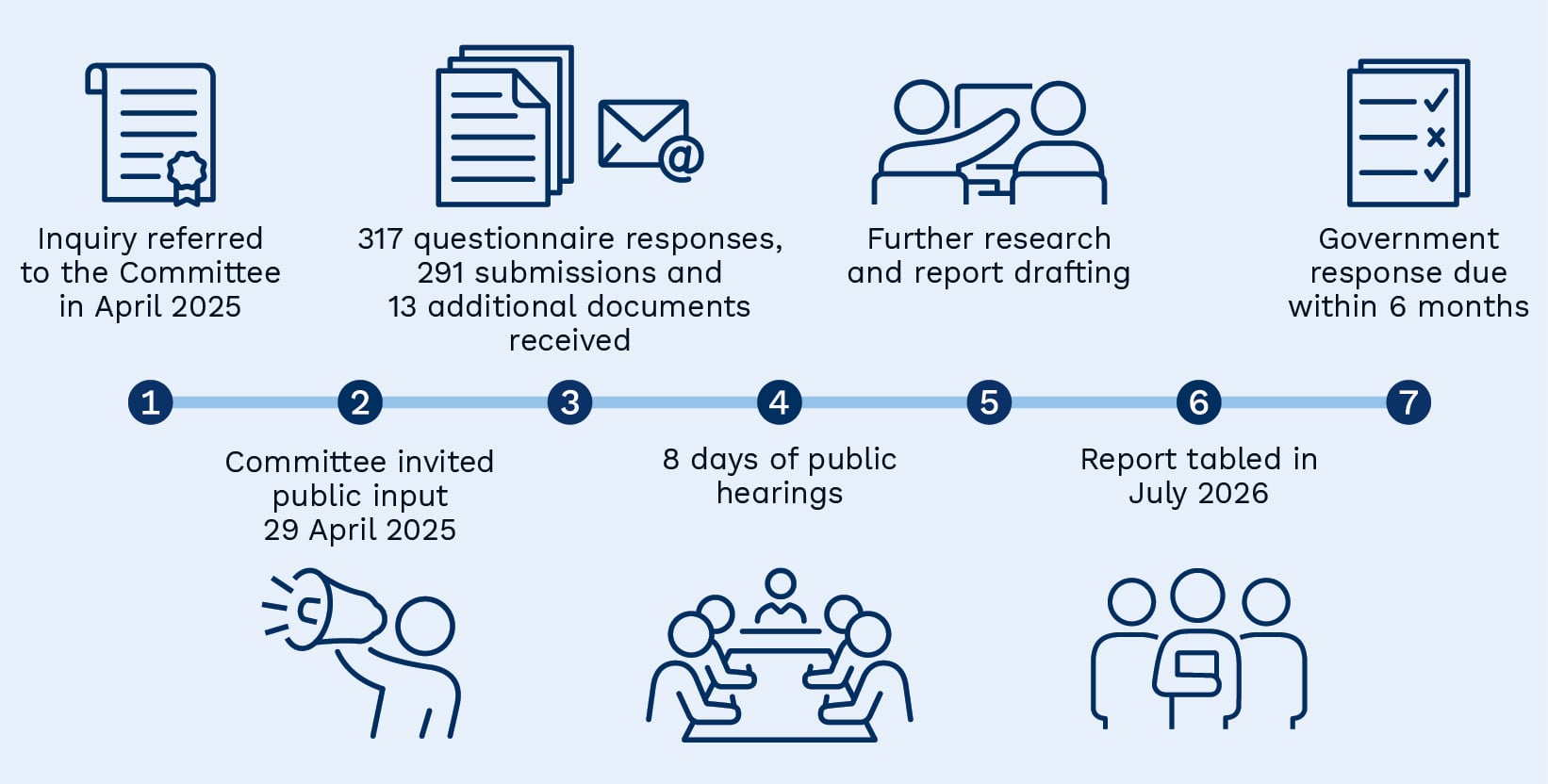
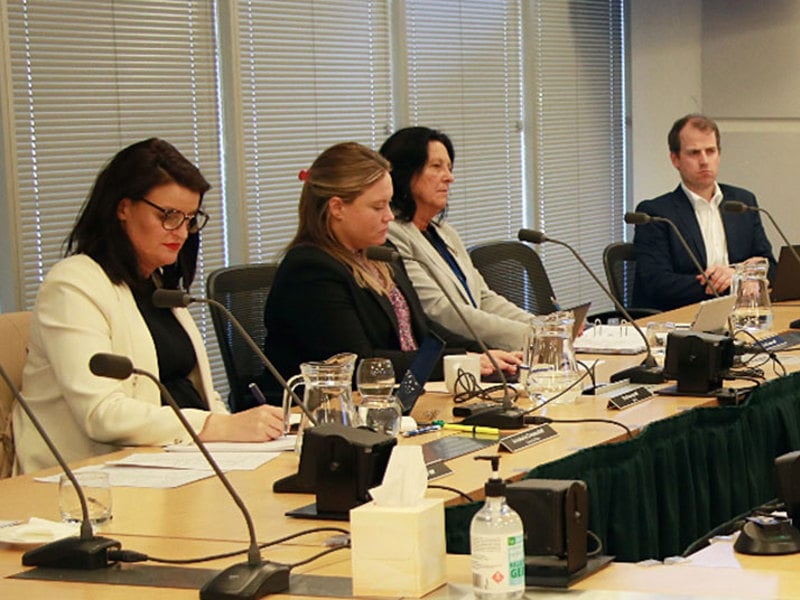
Eight days of public and private hearing were held in Melbourne, engaging with a range of stakeholders with lived experience and expertise.
The report was presented to the Legislative Assembly on 29 July 2026.
What’s next?
The Victorian Government has six months to respond to the recommendations in the Committee’s final report. Once received, this response will be published on the Committee’s website.
Expiry of the Legislative Assembly ahead of the State election.
At the end of the 60th Parliament, the Legislative Assembly Legal and Social Issues Committee will cease to exist. This is a standard part of the parliamentary cycle, as committees expire when the Legislative Assembly expires.
Any questions about the progress of recommendations or next steps should be directed to the Victorian Government, rather than the Committee.
To learn more about what this means for parliamentary committees see: Page lviii of Volume 1: Crossing the line.
Referral information
It can be challenging to share or talk about personal experiences.

If you or someone you know is in immediate danger, please contact 000.

If you require any support, the following support services are available:
Lifeline – Call 13 11 14, available 24/7, or visit Lifeline.org.au.
Kids Helpline – Call 1800 55 1800, available 24/7, or visit KidsHelpline.com.au.
Blue Knot Helpline and Redress Support Service – If you or someone you care about is living with the effects of abuse, neglect, violence or exploitation – Call 1300 657 380, available 9 am to 5 pm 7 days a week, or visit BlueKnot.org.au.
Sexual Assault Crisis Line – Call 1800 806 292 or contact your local sexual assault service.
Sexual Offences and Child Abuse Investigation Team (SOCIT) – visit Find contact details for each SOCIT across the state.
Victims of Crime Helpline – Call 1800 819 817, available 8 am to 7 pm Monday to Friday and 8 am to 5 pm Saturday, Sunday and public holidays, or Text 0427 767 891, or visit victimsofcrime.vic.gov.au.
13YARN – Call 13 92 76, to talk with an Aboriginal or Torres Strait Islander Crisis Supporter, or contact enquiries@13yarn.org.au.
Australian Federal Police – If you or someone you care about are experiencing or have experienced modern slavery — Call 131 237, or visit Human trafficking and slavery | Australian Federal Police.
Support organisations that provided Inquiry evidence and may also be able to provide support, include:
Cult Consulting Australia – 03 9523 2299, Cult Consulting Australia | Victoria, info@cultconsulting.org.
Cult Information Family Support Inc. – 0423 332 766, CIFS – Cult Information and Family Support, info@cifs.org.au.
The Olive Leaf Network Australia – Olive Leaf Network Australia, support@au.oliveleaf.network.
Religious Trauma and Cults (formerly The Religious Trauma Collective) – Religious Trauma and Cults, contact@thereligioustraumacollective.com.
Pathways to report child sexual abuse and seek support
During the course of this Inquiry, the Committee was made aware of experiences and allegations of child sexual abuse. To help ensure that people affected by child sexual abuse are aware of the appropriate avenues for reporting, advice and support, the Committee prepared some information pathways to report child sexual abuse and seek support.
The Committee has now published this information to make it available to anyone who needs help. The document outlines organisations and services that can provide reporting options, advice, support and specialist assistance for people affected by child sexual abuse, including victim survivors, families, carers and professionals.
If you or someone you know may be affected by child sexual abuse, you may wish to contact one or more of the services listed in the document.
Latest news and videos

Media releases
Call for Victoria to take action on the devastating impacts of coercive high-control groups
Media Release | 29 July
Inquiry to consider recommendations for responding to coercive high-control groups
Media Release | 27 November 2025
Further hearings to consider responses to high-control groups
Media Release | 7 November 2025
Support and advocacy groups to present at inquiry hearing on cults
Media Release | 31 October 2025
Inquiry to hear from cult experts, people with lived experience and faith representatives
Media Release | 16 October 2025
More witnesses to speak about impact of cults
Media Release | 8 October 2025
Committee shares lived experience insights into coercive high-control groups
Media Release | 16 September 2025
Hearings begin for inquiry into cults and organised fringe groups
Media Release | 21 July 2025
Inquiry examines coercion by cults and other groups
Media Release | 29 April 2025
Subscribe for email updates to this inquiry
Download guidance note
Contact us
Write
Parliament of Victoria
Legislative Assembly Legal and Social Issues Committee
Parliament House
Spring Street
East Melbourne VIC 3002
Telephone
If your enquiry relates to the inquiry into cults and organised fringe groups, please call: 03 8682 2628
If you have a general enquiry, call: 03 8682 2843.
Terms of reference
The terms of reference are instructions which explain what a committee has been asked to do, what topics it should focus on, and how its members will work together to achieve its shared goals.