Bringing Victoria’s solar boom to apartments
30 January 2026
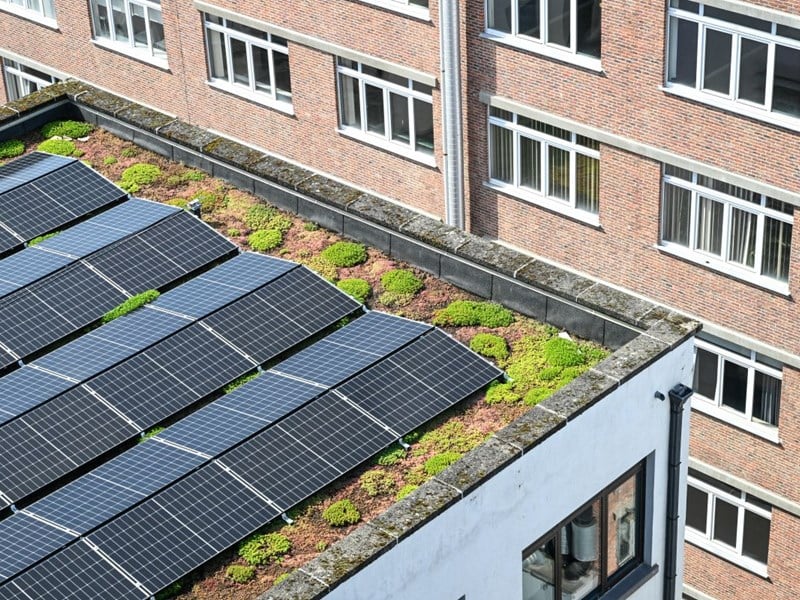
As Victoria accelerates toward its renewable energy targets, a growing focus is falling on the state’s apartment residents, households historically left behind in the rooftop solar boom that has transformed Australia’s suburbs.
The Legislative Assembly Environment and Planning Committee is inquiring into expanding access to renewable and affordable electricity for people living in apartments, townhouses and other multi-unit dwellings. The inquiry will consider recent changes to technology and electricity supply; and barriers to accessing renewable and affordable electricity for apartment residents compared with other households.
While rooftop solar has become a defining feature of detached family homes, installations on apartment buildings and other multi‑unit dwellings continue to lag significantly. This gap stems largely from added complexity; taller buildings, joint ownership structures, limited roof space and the financial and technical hurdles that follow.
‘Home energy upgrades across Victoria have already delivered real cost-of-living relief with annual savings of around $1,000 for households. Expanding access to rooftop solar for renters and social housing will ease the pressure of high electricity prices for vulnerable Victorians,’ said Committee Chair Juliana Addison.
About 12 per cent of Victoria’s 2.5 million households live in apartments, and low‑income residents are disproportionately represented among them.
Victoria has set legislated targets for 65 per cent renewable electricity by 2030 and 95 per cent by 2035, and emissions cuts of up to 80 per cent by 2035. Apartments, responsible for around 12 per cent of national built‑environment emissions, represent an untapped opportunity. Research from the University of New South Wales suggests Victoria could add up to 16,000 megawatts of rooftop solar capacity if apartments were fully utilised.
“ 'Expanding access to rooftop solar for renters and social housing will ease the pressure of high electricity prices for vulnerable Victorians.' ”
Juliana Addison, Committee Chair
‘Making sure all types of households have the opportunity to be part of that transition is vital if we are to meet those targets in a fair and equitable way,’ Ms Addison said.
Apartment buildings can adopt solar in two main ways: through individual systems or shared building systems.
Individual systems involve installing separate solar arrays for each apartment, feasible mostly in low‑rise or townhouse‑style complexes with enough roof space. Each household needs owners’ corporation approval but can then use or export its own solar generation.
Shared systems, more suitable for denser buildings, centralise solar generation for common areas or distribute it among apartments, funded through owners’ corporation mechanisms such as sinking funds, levies, loans or government programs.
Emerging technologies like Allume Energy’s SolShare make real‑time solar sharing easier and significantly increase on‑site use, while neighbourhood batteries offer an alternative to costly and complex on‑site storage. These two pathways provide flexible options for expanding apartment solar, depending on building design, governance arrangements and available roof space.
Both the federal and Victorian governments have begun rolling out targeted programs to expand access to rooftop solar, batteries and other renewable technologies for apartment residents.
Nonetheless a range of barriers remain, including complex decision making, high upfront costs and technical constraints.
The terms of reference are available on the Committee’s website.
The closing date for submissions is 27 February 2026.