Bridging the political divide
7 December 2025

While the Victorian Parliament is often portrayed as a battleground of conflict, with heated arguments and tense debates, this image only tells part of the story.
Behind the scenes, much of Parliament’s work happens through constructive collaboration, where politicians from different parties come together to create meaningful change.
‘Ninety to ninety-five per cent of things in Parliament are agreed on,’ says Labor MP Lee Tarlamis.
‘But the media tends to focus on the small percentage that aren’t, and that’s not an accurate picture of how the chamber works.’
Despite common assumptions, cross-party cooperation is not just common, it’s essential.
Exploring the collaborative nature of Parliament unveils a new dimension of politics, one that breaks down divisions and reveals a more hopeful and cooperative side of democracy that often goes unnoticed by the public.
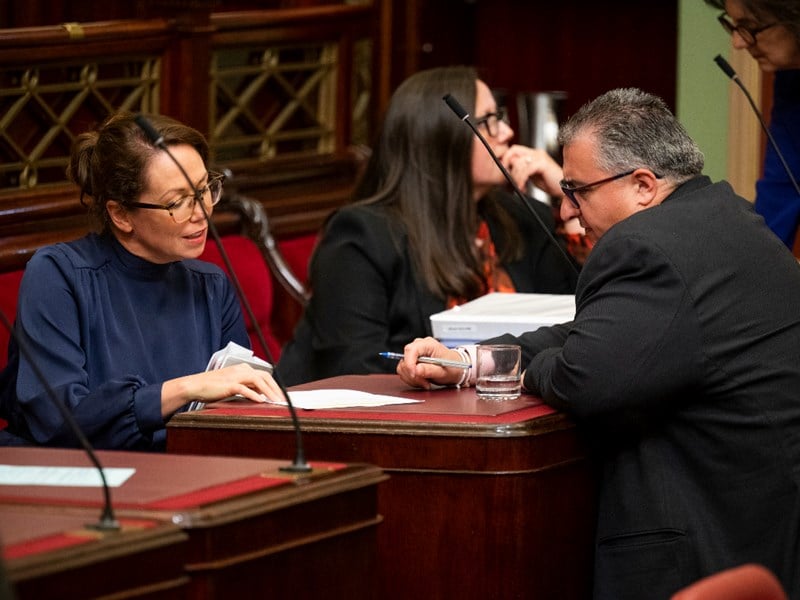
As government whip in the Legislative Council, Tarlamis plays a vital role in coordinating communication and negotiation among his own party and with MPs of other parties.
‘The role of the whip goes beyond politics. It’s about ensuring the smooth running of the chamber and helping people work together,’ he said.
‘I spend a lot of time talking to the opposition and crossbench individually, moving things around by agreement. It’s all about maintaining a collaborative arrangement.
‘We can’t do anything unless there’s agreement. I listen to all concerns and work through compromises. If it looks like the crossbench or opposition might miss out on something they’re passionate about, I try to facilitate that—everyone should have a say before it goes to a vote.
‘The vote will be what it is, but everyone should have the opportunity to get their views on the record.’
Legalise Cannabis MP Rachel Payne emphasises that Parliament should be guided by the benefits that collaboration can bring, focusing on the issues themselves.
Recently she played a key role in the successful passage of a bill establishing a legal framework for pill testing, working alongside Animal Justice Party and Greens MPs. She sees it as a significant achievement and pivotal moment.
‘We felt it was important to bring that forward as a collaborative effort and to take the politics out of what is really a public health issue,’ she explained.
This cross-party initiative prompted a constructive response from the government—an outcome that Payne sees as proof that cooperation, not conflict, is key to creating effective and impactful policy.
‘We felt as though some things are above a political agenda,’ she said.
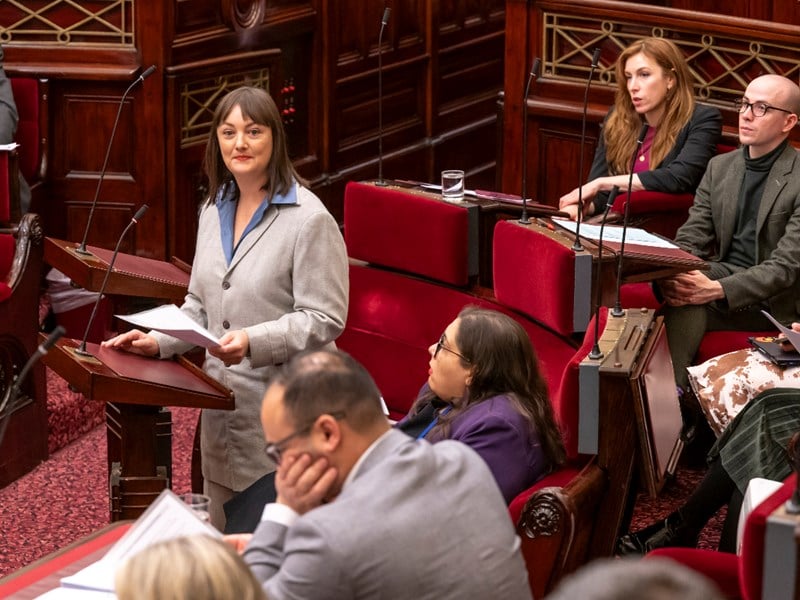
By joining forces with other parties on key issues, Payne sees the opportunity to build a stronger platform for meaningful change. At the same time, she recognises the importance of engaging with people who have contrasting views.
‘People in politics can get stuck in an echo chamber of just speaking to people who constantly agree with them, whereas I enjoy speaking to colleagues who have very different opinions to me,’ she said.
Another way in which MPs collaborate is through the work of parliamentary committees, which are focused on considering issues as shared concerns and advocating for solutions collectively.
Nationals MP and Deputy Chair of the Legislative Assembly Environment and Planning Committee, Martin Cameron has seen firsthand how MPs from across the political spectrum unite around shared priorities.
The committee, comprising MPs who are mostly from regional areas, has undertaken public inquiries into issues such as safeguarding Victoria’s food bowl, ensuring tradies receive timely payment, and expanding access to affordable housing across regional areas.
‘When I first joined the committee, which includes both Labor and Liberal members, I saw that all regional representatives were committed to working together,’ Cameron said.
‘At the beginning, members were a little guarded when discussing certain points, but it quickly became clear that everyone is involved for the right reasons.
‘The issues we deal with are very different from those in the Melbourne CBD, which means we have a shared purpose from the outset.
‘We work collaboratively and reach agreement on what we present to the government.’
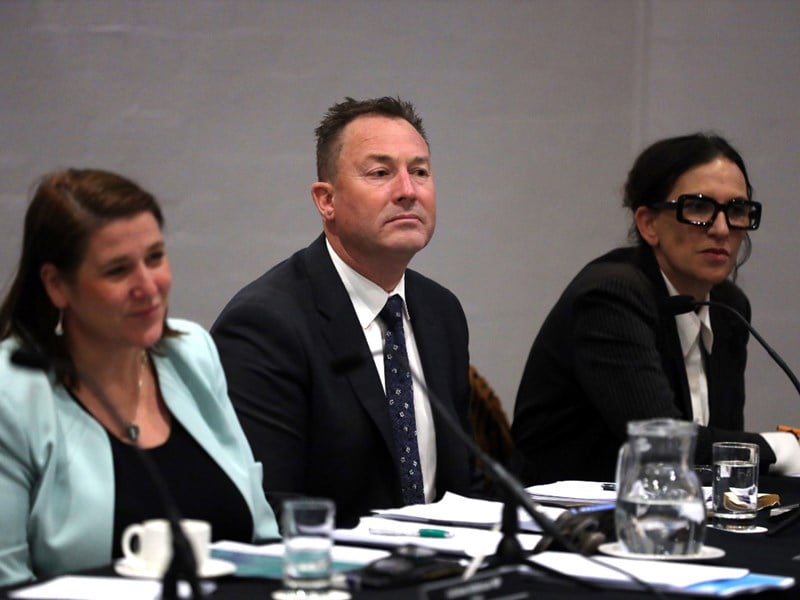
For Cameron, the strength of this cross-party work lies in its openness and independence. Every member is encouraged to speak freely, vote according to their community’s needs, and approach issues without preconceived ideas.
He highlights recent government adoption of several committee recommendations as evidence that pragmatic, cooperative politics genuinely delivers results.
Watching a bill go through Parliament with amendments shaped directly by the committee’s work was ‘a proud moment, proof that when MPs prioritise community over party, Victoria benefits’.
Lee Tarlamis points to parliamentary friendship groups as another example of collaboration in Parliament that extends beyond party lines. As a member of several such groups, he works with MPs from across the political spectrum to build understanding, share knowledge and foster cooperation.
Through the Parliamentary Friends of the Pacific Islands, for example, he promotes links with neighbouring nations such as Fiji, Nauru and Tuvalu, which have twinning partnerships with the Victorian Parliament.
Tarlamis values the opportunity to share insights on governance and parliamentary processes with colleagues from those parliaments, including through workshops that help strengthen democratic understanding and promote mutual respect.
It’s just another example of the meaningful cooperation behind closed doors that keeps democracy moving.
At a time when politics is often seen as divided, the collaborative work of MPs reminds us that respect, dialogue and shared purpose remain powerful drivers of progress.
About the Author

Francesca Zeccola
A participant in the Parliament Express program conducted by the Parliament of Victoria in partnership with Express Media. The program provided mentoring and engagement experiences, leading to a series of articles written by young Victorians for the Victorian Parliament's website.