Inquiry calls for a halt to housing towers plan
11 December 2025 Read the report
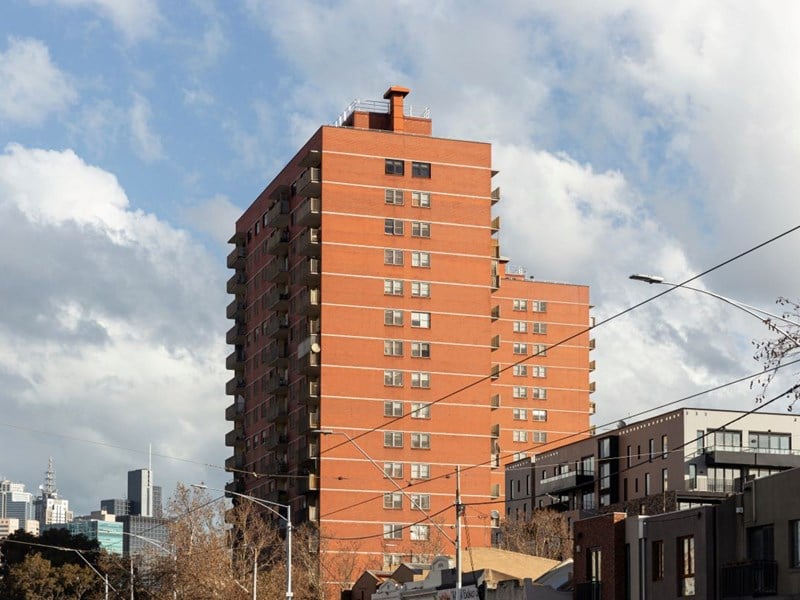
A Victorian parliamentary inquiry has called for an immediate pause on the state government’s plan to demolish and redevelop Melbourne’s 44 public housing towers, citing a lack of evidence and transparency around the multi-billion-dollar project.
The towers, built between the 1950s and 1970s, currently house around 10,000 residents. Under the government’s plan, announced in 2023, the sites would be transformed into mixed-tenure developments accommodating up to 30,000 people by 2051.
Homes Victoria has argued the towers are ‘past their use-by date’, citing structural issues, poor accessibility, and non-compliance with modern safety standards. Officials estimate it would cost $2.3 billion over 20 years just to maintain the towers in their current condition, far more than the cost of maintaining other public housing stock.
The Legislative Council Legal and Social Issues Committee inquiry’s final report found the government had failed to provide key documents, including cost-benefit analyses and feasibility studies, to justify demolition over alternatives such as refurbishment.
In November 2023, the Legislative Council ordered the production of all documents relating to the redevelopment, however the government only produced 12 of those documents and claimed Executive Privilege over 146 others.
Committee Chair Joe McCracken explained that the Victorian Government is required to provide the documents to the Parliament, saying: ‘The government’s justification for not producing the documents is simply wrong. The Victorian Constitution clearly gives Parliament the power to demand documents. The Government is not and cannot be the sole judge in deciding when Privilege applies.’
In tabling the report, Mr McCracken said the inquiry attempted to ‘answer one simple question: should the government have demolished and rebuilt the towers, or were other options viable?’
But, he said, without access to the key documents ‘it becomes very difficult to understand why the government chose their course of action as opposed to the other options that could have been available’.
The Committee recommended that all documents that have a claim of Executive Privilege be submitted to an independent arbiter to determine whether a legitimate claim exists in accordance with the relevant Legislative Council Standing Order.
“ 'The Victorian Constitution clearly gives Parliament the power to demand documents.' ”
Joe McCracken, Committee Chair
Government members of the Committee, who submitted a minority report, argued the inquiry heard sufficient evidence to justify the decision to replace the towers.
‘We had evidence of failing sewer stacks and mould in walls caused by sewage,’ Ryan Batchelor told the Legislative Council.
‘Evidence of concrete cancer; evidence of the structural challenges that are faced due to the unique construction and design of these towers that stand them apart from other high-rise buildings in Melbourne; evidence about ceiling heights being too low for modification; and evidence that 95 per cent of the lifts in these towers cannot fit a stretcher, which means that if residents call an ambulance they cannot be properly cared for,’ he said.
‘There are fire safety risks. The units are too hot in summer and too cold in winter. The electrical systems do not meet residents’ needs, and there is a failure to meet disability standards,’ he said.
“ ‘We had evidence of failing sewer stacks and mould in walls caused by sewage.’ ”
Ryan Batchelor, Committee Member
The inquiry also found there had been significant trauma, distress and anxiety experienced by many residents of the public housing towers due to poor communication following the program’s announcement.
‘Homes Victoria recognises this, but significant work remains to rebuild trust,’ according to the Chair’s Foreword to the report.
‘While consultation has occurred, the quality of engagement has too often been poor. In the early stages especially, inadequate and inaccurate communication allowed confusion and anxiety to spread. There have been some improvements, however more needs to be done,’ he said.

The report makes a range of recommendations to improve consultation with residents including guaranteeing a right of return, communicating with affected residents prior to making public announcements and ensuring staff engaging with public housing tenants in future tranches of redevelopment can answer residents’ questions about their rights in relation to the program.
Committee member Anasina Gray-Barberio praised the evidence given by tower residents, including Reem Yehdego, who told the inquiry:
‘When governments tear down housing without care, without listening and without a commitment to building something just, they are not just removing buildings, they are cutting into the roots of our communities.’
The inquiry received more than 800 submissions and held five days of public hearings, including at or near the towers in Flemington and North Melbourne, South Yarra, and Richmond.
The Committee has made 36 findings and 21 recommendations.
The report is available on the Committee's website.