Public Gallery
Thank you for visiting the Legislative Council.
See below for information about this chamber and speak to a staff member if you need assistance.
Gallery guidelines
Please view these guidelines if seated in the gallery
- Visitor stickers or passes must be worn and displayed at all times.
- Visitors must be accompanied by a passholder at all times, including the public gallery.
- Filming or photography from the public galleries is not permitted without the approval of the President.
- Mobile phones must be switched off or on silent.
- Eating and drinking is not permitted.
- Interjections from the galleries are disorderly and not permitted.
- Persons seated in the galleries must not communicate with or attempt to communicate with members in the Chamber.
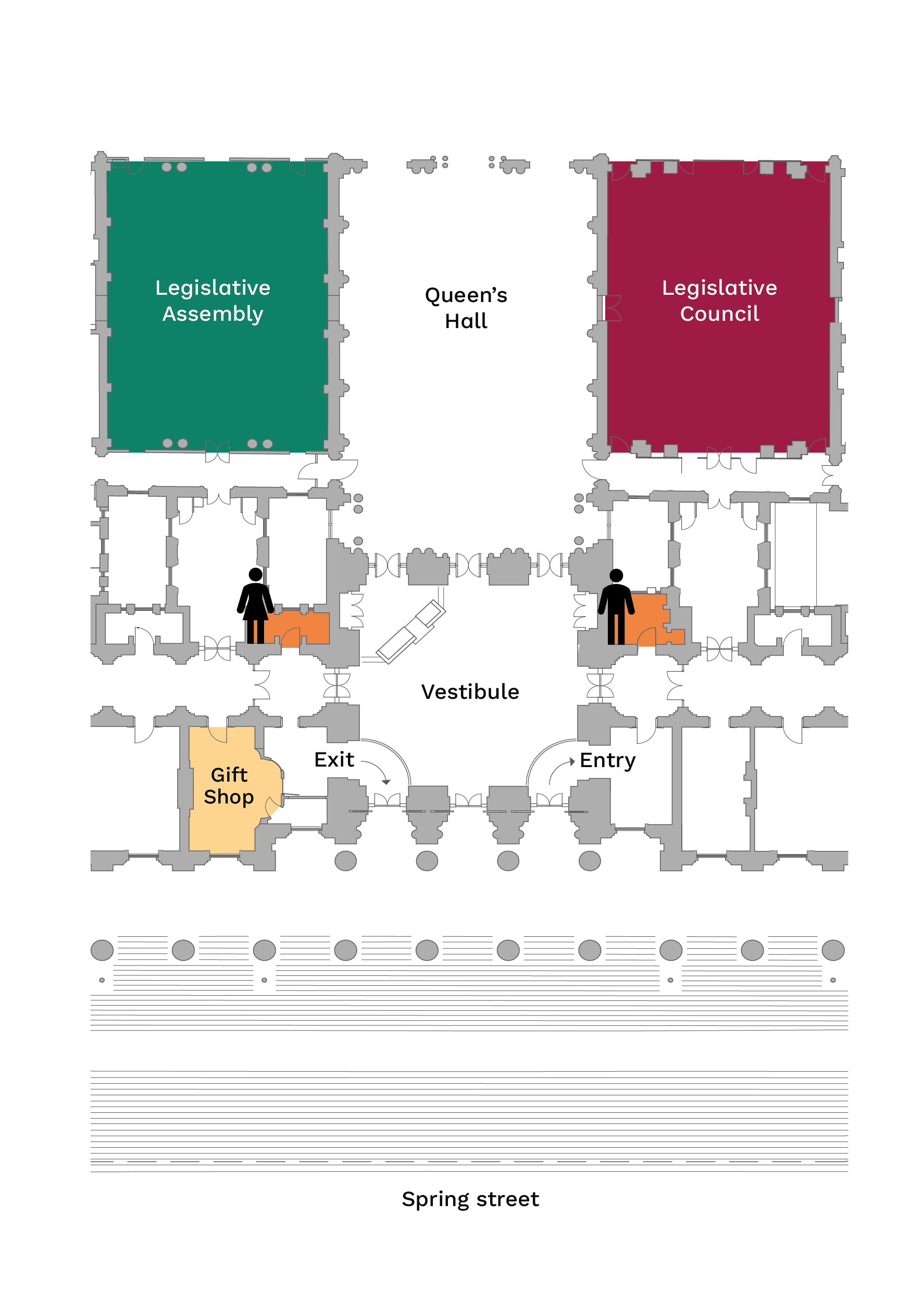
- Visitors must leave any large bags and umbrellas in the Vestibule.
- Signs and props must not be taken into or displayed from the galleries.
- It is not appropriate to read books or newspapers or to engage in audible conversation while in the galleries.
- No leaning on or over the railing/balustrade.
- Instructions of parliamentary staff and Protective Services Officers must be complied with.
Anyone failing to comply with these guidelines may be asked to leave the gallery
The role of the Legislative Council
House of Review
The Legislative Council is the Upper House of the Victorian Parliament and is often called the 'House of Review'. This is because the Council is an important check on the government’s power, spending more time dealing with non-government business and reviewing bills in detail during the ‘committee of the whole’ stage of a bill's passage.
In addition, the Council can order the government to provide information and hand over documents in their possession.
-
15
Government members
-
14
Opposition members
-
11
Crossbench members
Key roles in the Chamber
Members of Parliament
Members of Parliament are elected representatives of the Victorian people.
Every Victorian region is represented by five Legislative Council members.
Members can take on other roles within the Parliament, such as minister, parliamentary secretary or member of a parliamentary committee.
President
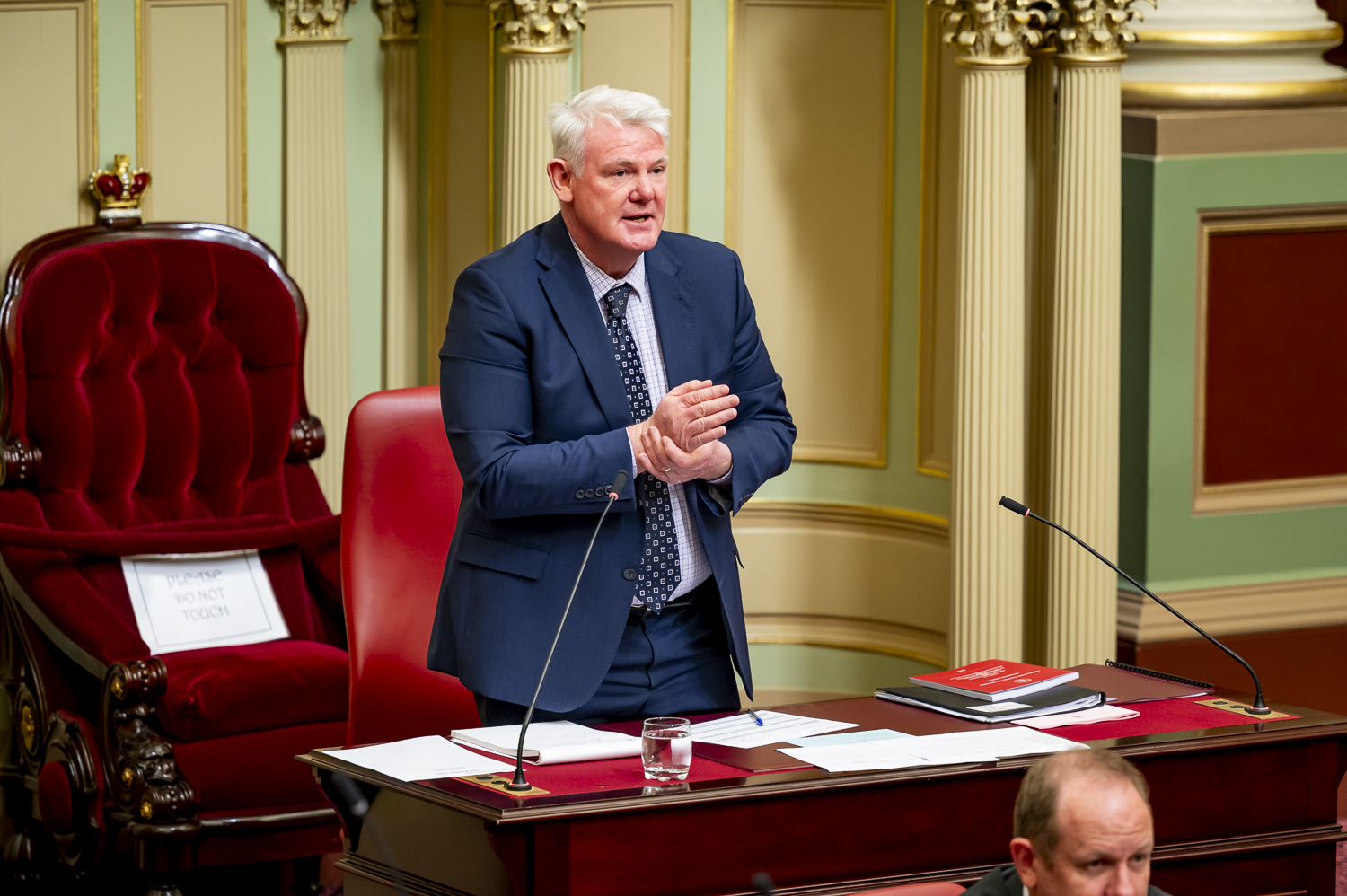
The President leads meetings of the Legislative Council, and on a sitting day:
- interprets and applies the rules of procedure and debate
- runs votes on bills and other matters
- calls on members wishing to speak.
The President may vote on issues being debated.
The President oversees the administration of the Council and along with the Speaker of the Legislative Assembly, is responsible for the administration of the parliamentary precinct as a whole.
The current President of the Council is the Hon. Shaun Lean MP.
Clerks
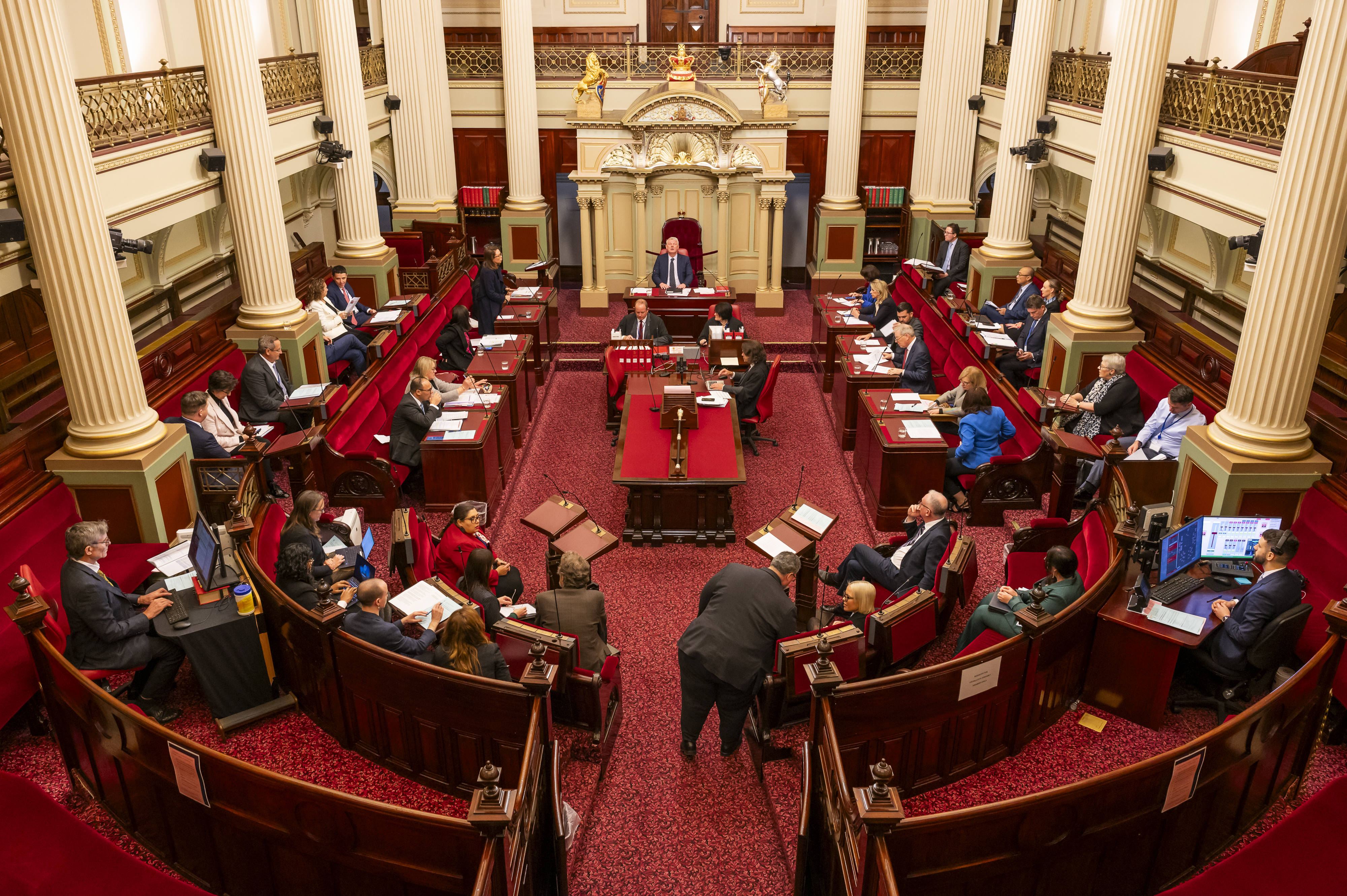
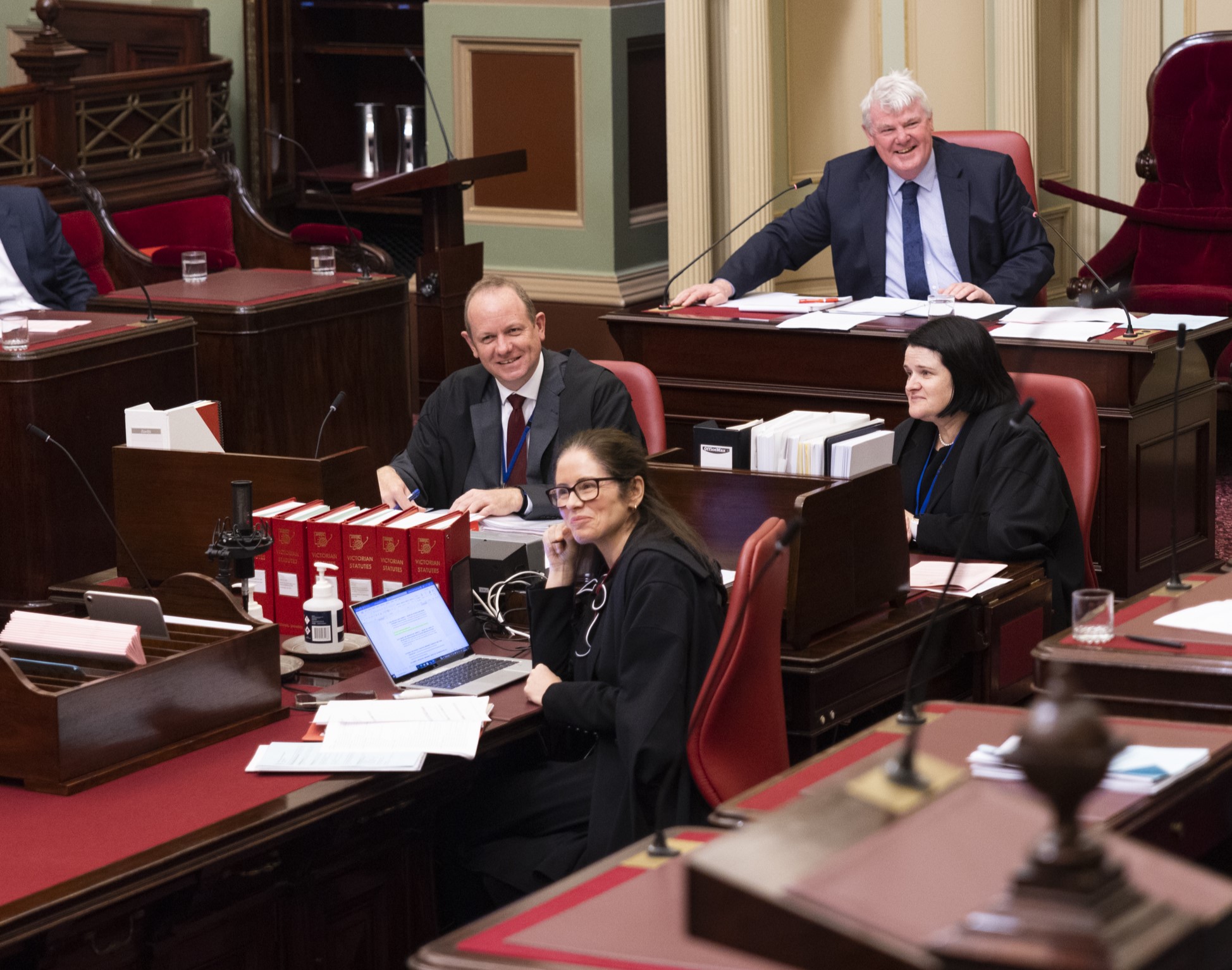
The Clerks are the most senior unelected staff in the Legislative Council and sit at the table in the center of the Chamber in front of the President while Parliament is sitting. The Clerks:
- provide advice to members on parliamentary rules and procedures
- certify bills that have been passed
- table petitions and documents
- record the actions and decisions taken during the sitting
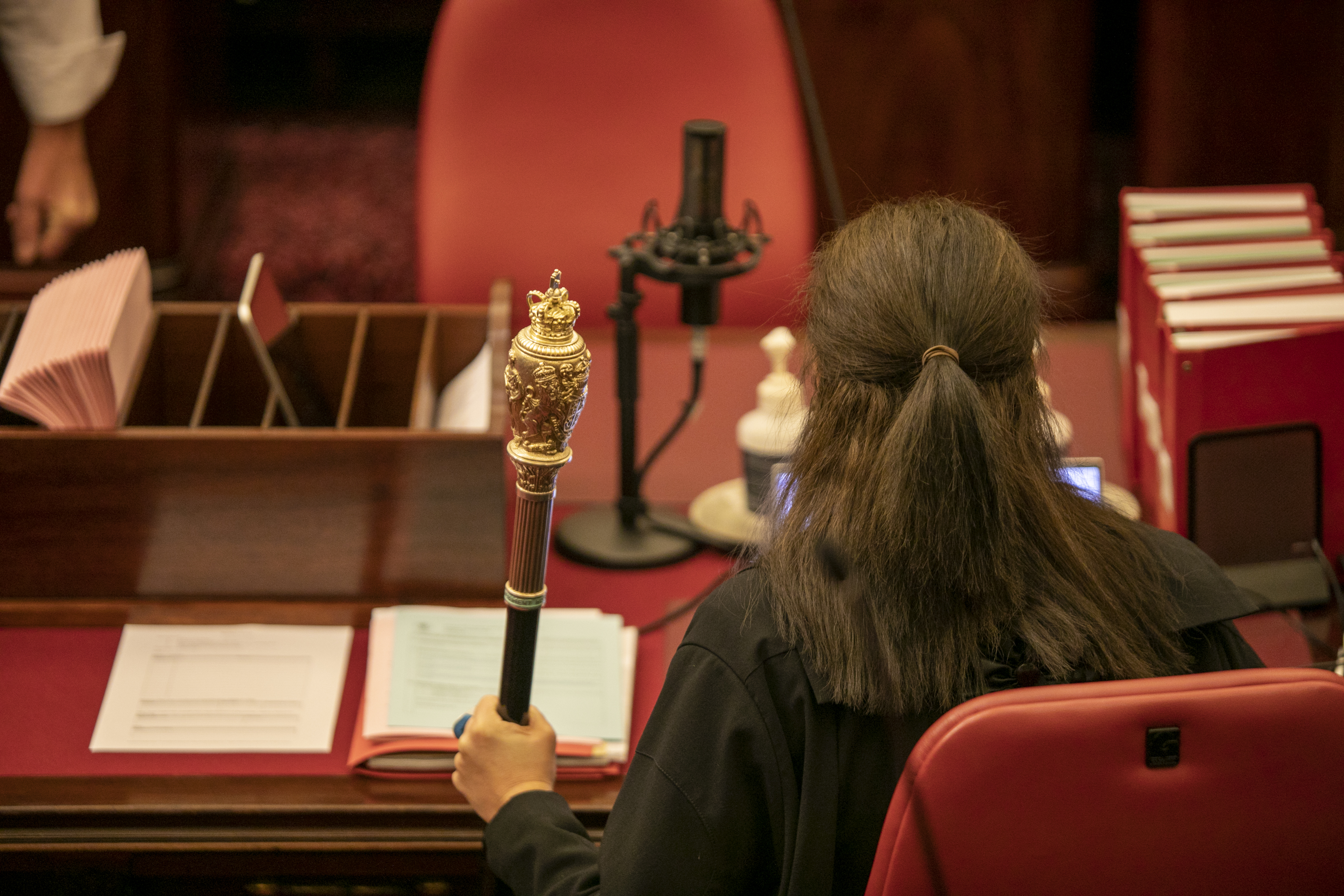
Usher of the Black Rod
The Usher of the Black Rod is responsible for the security of the Chamber as well as performing ceremonial duties. At the beginning of each sitting day, the Usher of the Black Rod will ‘stamp in’ and announce the President to the Council.
The Black Rod itself is made of Fiddleback Blackwood and gilded sterling silver and has a sovereign coin embedded in its base. It is placed on the table when the Chamber is in session, with the crown pointing towards the chair.
Chamber architecture
Have you spotted these unique features of our Chamber?
The Vice Regal Chair
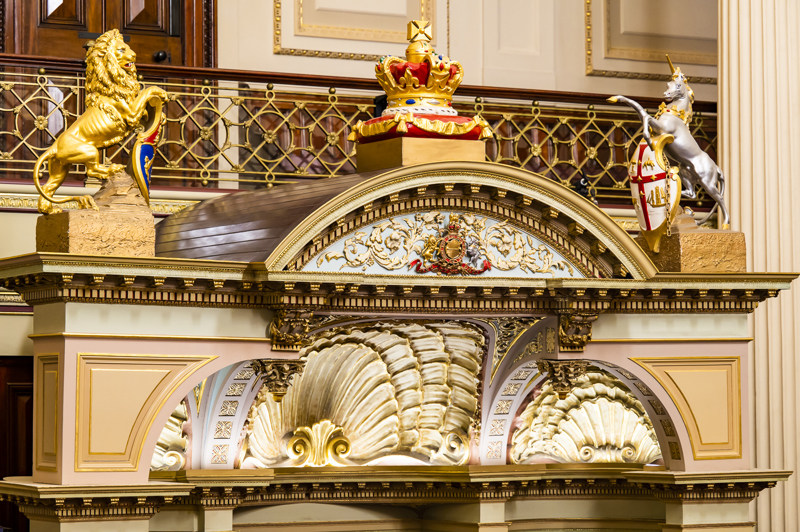
The chair located behind the President, under the canopy is known as the Vice-Regal Chair and only the King or the Governor can sit in it.
This is used every 4 years for the opening of Parliament.
The only time a reigning monarch has sat in this chair was in 1954, when Queen Elizabeth opened Parliament. A photo of this event is on display in the Vestibule.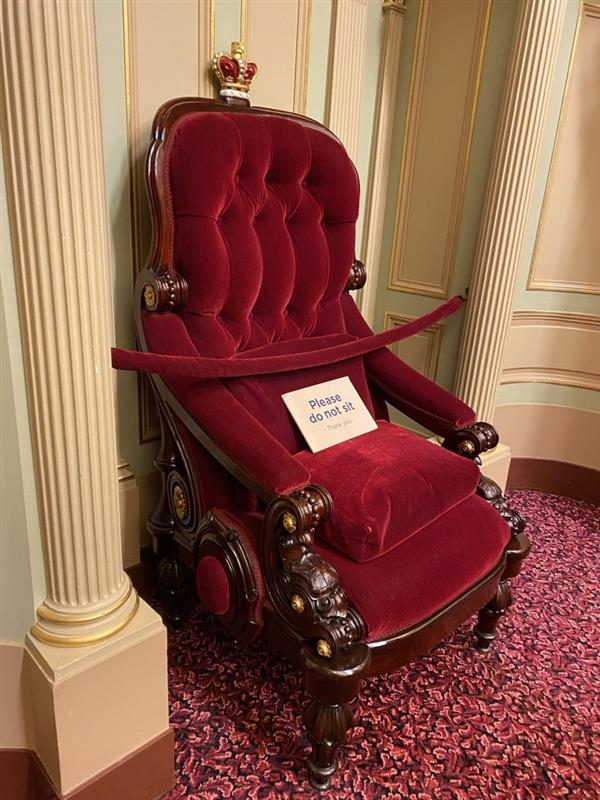
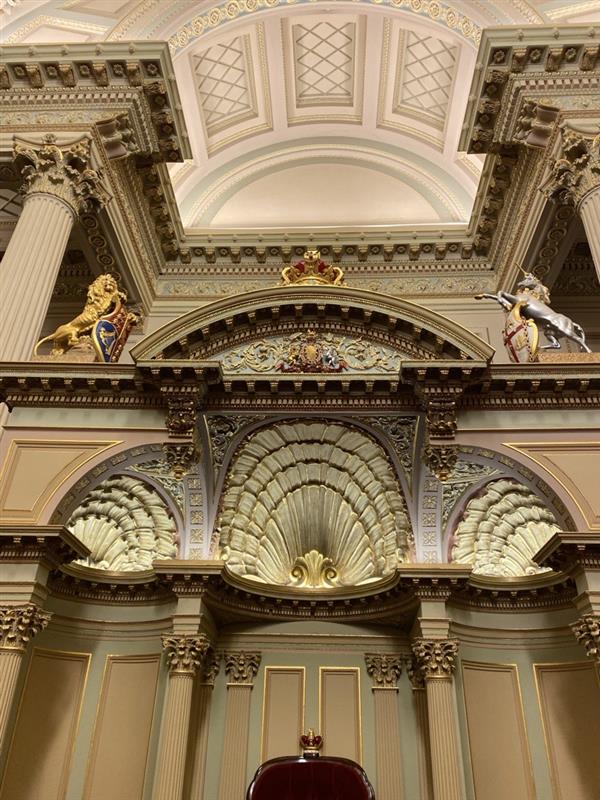
The Canopy
The canopy that sits behind the Vice-Regal chair was a gift from the United Kingdom Government, and includes:
- The shells representing the openness of Parliament,
- The glow of the lights representing the enlightenment of Parliament
- The Lion (strength) representing England
- The Unicorn (purity) representing Scotland
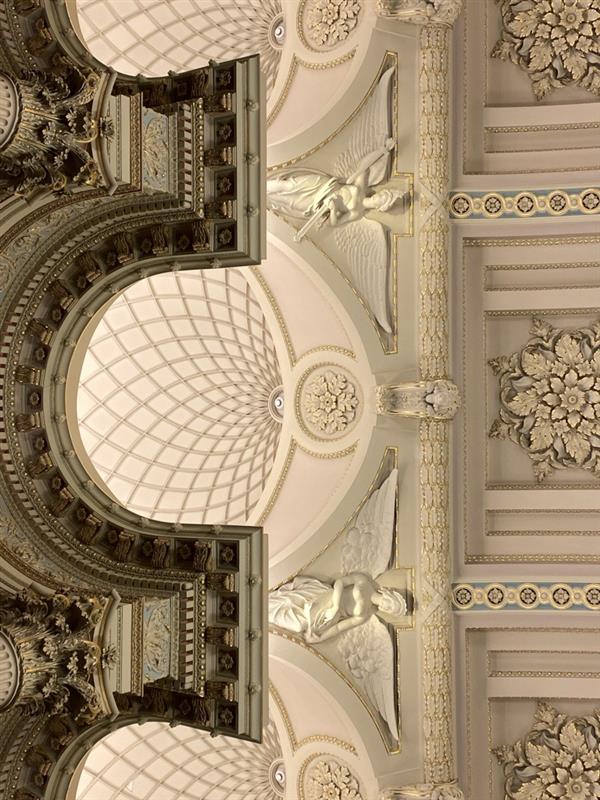
The Angels
The eight angels across the top of the Chamber are:
- Statecraft – scales
- Mercy – sheathing a sword
- Architecture – open ledger, ruler, compass & protractor
- Fame or Glory – trumpet of fame
- Wisdom – helmet with shield & sword
- Unity – with an unbroken chain. This was renamed from Liberty, as the chain was originally unbroken. The chain was ‘fixed’ when the federal parliament moved out of the building in 1927
- History – holding a book & pen
- Plenty – holding a cornucopia & sprinkling gold dust.
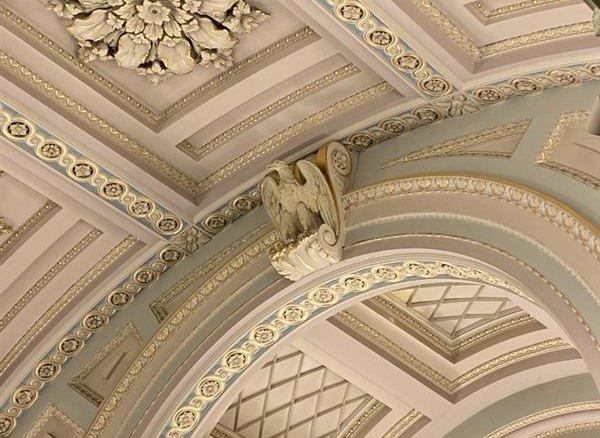
The Eagles
The Eagles at each end of the Chamber are believed to represent either the German House of Hanover or Saxe-Coburg.
Queen Victoria was a descendent of the House of Hanover, and her husband, Prince Albert was from the House of Saxe-Coburg
Chamber seating plan
Some interesting facts and statistics
-
1979
Gracia Baylor and Joan Coxsedge became the first women elected to the Victorian Legislative Council
-
8
Regions that make up Victoria are each represented by five Members
-
11
Districts must be within each region
Building Map