Striving for a more inclusive future
14 October 2026

Members of Parliament from across the political spectrum share a common interest in broadening community participation in our democracy, particularly among First Nations and multicultural communities.
While Parliament is often viewed as a place defined by political division and partisan debate, MPs from different regions and political parties share a commitment to ensuring a variety of voices are heard in decision-making.
For Jade Benham, Nationals Member for Mildura in the Legislative Assembly, multiculturalism is woven into everyday life across the state.
‘Across Victoria and Australia, there hasn’t been a community that hasn’t been touched by multiculturalism, and that’s a good thing,’ Benham says.
In her role as an MP, there are layers of complexity to navigate each day to ensure she is representing the opinions, values and histories of everybody in her electorate when she speaks in Parliament.
‘MPs have to remember that we represent on behalf, we don’t speak for. So, maintaining integrity and a balanced view on the issues within a community is really important,’ she says.
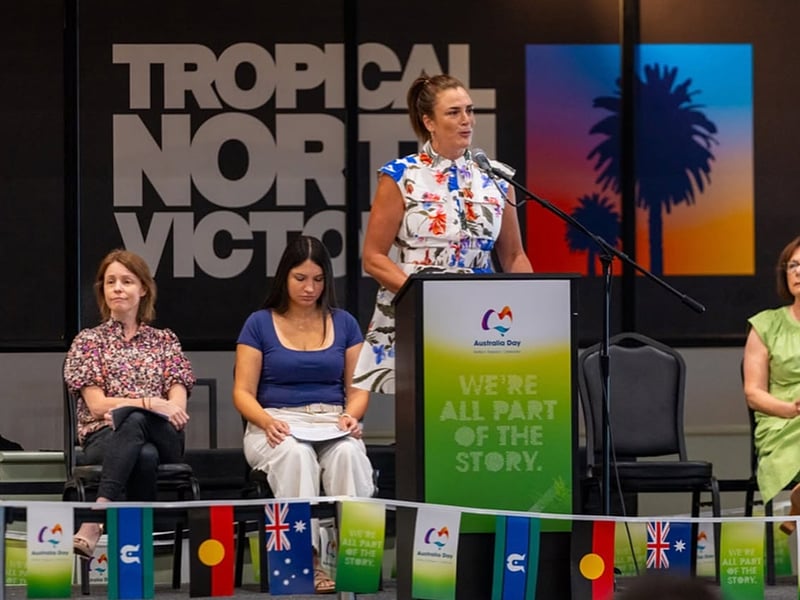
Benham is also eager to acknowledge the strength and resilience of First Nations communities.
‘There are so many wonderful stories to be told about the evolution of First Nations communities in Australia, and their generational challenges that might span back two hundred or three hundred years,’ she says.
‘It’s important for me to be involved and to be in touch with as many different members of that community as I can.’
To ensure she can represent that diversity of views in her electorate that spans more than 35,000 square kilometres, Benham engages with representative bodies in smaller communities to ensure she can reach and understand the opinions of as many community members as possible.
‘You rely on the fact that those representative bodies are representing their community in good faith, and then we go and speak to them to gather intelligence and data.’ she explains.
Similarly, Greens Member for Melbourne in the Legislative Assembly, Ellen Sandell bases her decisions as an MP on a simple question: ‘How do I use my role to facilitate—whether it’s laws or programs or funding—a stronger connection with community?’
She recognises the diversity of her electorate and believes she must understand its different communities to represent them effectively in Parliament.
‘My electorate is really very diverse. We have some wealthier pockets because we are right in the inner-city, we have some pockets where we have a lot of people who are quite vulnerable, or where there is a lot of poverty,’ she says.
‘We also have a lot of people who are not born in Australia, so there are a lot of multicultural communities.’
Sandell sees it as her job to listen to as many of these communities as possible to foster thriving connections within her electorate.
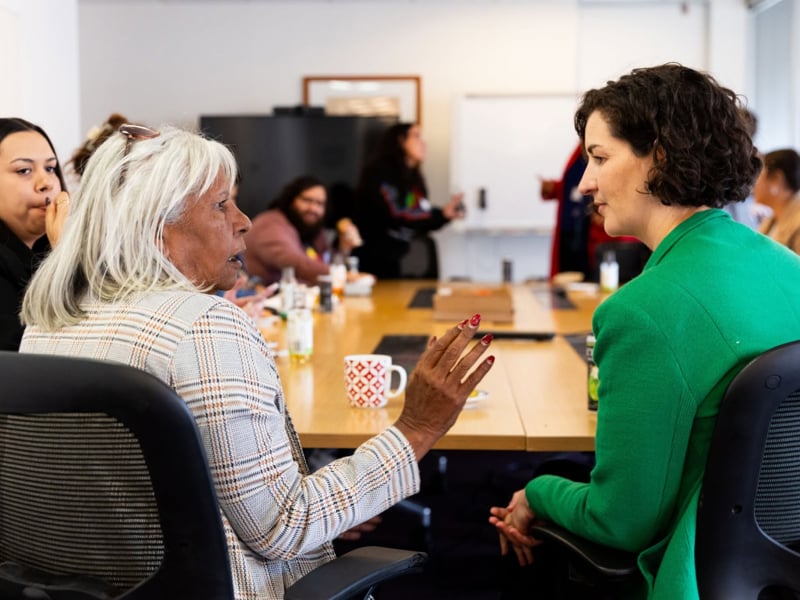
That extends to her role as the Victorian Greens’ Spokesperson for First Nations.
‘I feel a sense of responsibility as the custodian of the First Nations portfolio as a non-Indigenous woman until such time as we have a First Nations Member of Parliament from the Greens who would like to take that portfolio on.’
She acknowledges the limitations of her perspective as a non-Indigenous woman, prompting her to engage and listen to members of the First Nations community to represent their views in Parliament.
‘It was important to me when I was coming into this place to really know the history of the place I was coming into,’ she says. ‘I had a feeling of responsibility to that history and to that community that has such an incredibly rich connection to Country and culture but has also had a lot of injustice perpetrated on them by institutions like the Parliament.’
Chris Couzens, Labor’s Member for Geelong in the Legislative Assembly, also speaks to this combination of personal and portfolio responsibilities when fulfilling her role as an MP and as Parliamentary Secretary for First Peoples.
‘First Peoples have a beautiful culture that they want to share, but for me it’s about understanding what that culture means and understanding that First Peoples are giving us the privilege of learning their culture. We should be embracing that.’ Couzens says.
She has spent decades of her career, political and beyond, advocating for equality of access to healthcare, education and better employment outcomes for First Nations peoples.
She believes Victorians who are not of First Nations descent can build understanding through allyship and education.
‘The importance of learning First Nations history comes down to people understanding that Aboriginal people were the first people here, and that past history has actually controlled their lives,’ Couzens says.
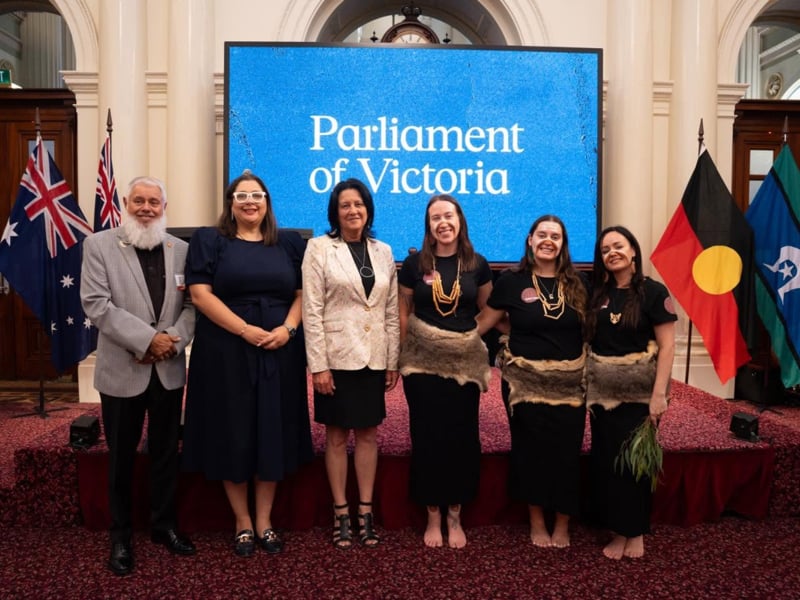
She argues that through the process of deep listening the Parliament can truly change the lives of people in our state.
MPs need to remain non-judgmental and open to the many perspectives that shape multicultural Victorian society, she says.
‘That deep listening has to happen because without it, we can’t move forward. In the past, we have seen governments of all persuasions not do that deep listening, saying all the right words but never delivering.’
Couzens also emphasises her responsibility to First Nations voices.
‘I don’t speak for First Peoples, but I will advocate with direction from them on what they’re saying needs to happen. All the hard yards come from them.’
For each MP, no matter the party affiliation, there is a mutual goal of representing their communities rather than speaking for them.
Despite the different ways they may approach this responsibility, each MP also underlines the importance of education when looking towards the future of Victorian democracy. Their objective is ensuring that members of diverse, historically-underheard communities participate in government.
‘Education has got to be the start of the engagement,’ Benham says, highlighting the importance of social media in activating youth interest in government.
Sandell argues that for young people legislation should not be perceived as the only way to enact change.
‘We have other tools to make change like campaigning, rallying community, creating a movement, creating a groundswell of support or opposition to something.’
Couzens agrees on the importance of people, including decision-makers, educating themselves, particularly in relation to the issues that matter to First Peoples.
‘The key thing is the government’s preparedness to sit down, do that deep listening and understand what this all means for First Peoples,’ she says.
It’s a sentiment that Sandell echoes.
‘We don’t just consider ourselves legislators coming here, making decisions about legislation and then going home,’ she says.
‘We consider ourselves building a movement for change about the values we care about.’
About the Author

Harrison Abbott
A participant in the Parliament Express program conducted by the Parliament of Victoria in partnership with Express Media. The program provided mentoring and engagement experiences, leading to a series of articles written by young Victorians for the Victorian Parliament's website.