Inquiry hears of new wave hate crimes
27 July 2026
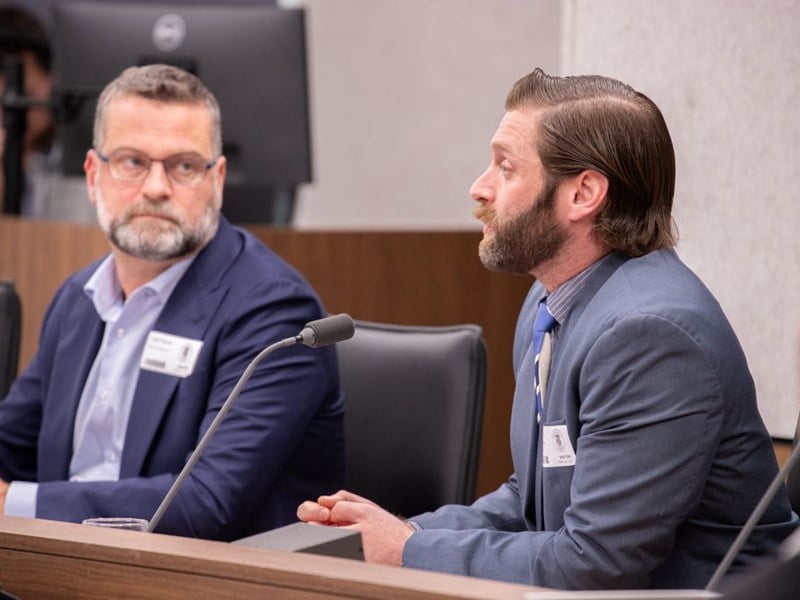
From app-facilitated attacks and online radicalisation, to warnings of extremist violence, a parliamentary inquiry has heard evidence that hate is becoming more organised, more visible and, in some cases, more violent.
The Legislative Council Legal and Social Issues Committee is inquiring into anti‑LGBTQIA+ hate crimes in Victoria.
The inquiry is examining the scale, scope and impacts of these harms across the state and investigating how anti‑LGBTQIA+ hate crimes occur, the methods used by hate groups and influencers to spread harmful content, the effectiveness of current prevention and safety initiatives, and the responsibilities of digital platforms in addressing online hate.
The Committee heard that across Victoria more than 95 reported attacks and 42 arrests have been linked to a pattern of app-facilitated violence targeting gay and bisexual men. Victims have described being lured to locations, assaulted, robbed, extorted and filmed. Community organisations say the real number is almost certainly much higher.
Chad Hughes of Thorne Harbour Health told the inquiry that a new pattern of violence had emerged over the past two years.
‘Victims have been lured through dating apps, ambushed by groups, beaten with bats, poles and machetes and filmed as they are abused and humiliated,’ he said.
‘The perpetrators are mostly young men, many of them teenagers. The attacks are deliberate and humiliating. Victims are forced to recite slurs on camera, and footage is shared online to give the perpetrators status with their target audiences, others in the manosphere.’
Joe Hack, Head, Global Government Affairs for dating app Grindr, said that perpetrators using the platform to target the LGBTQIA+ community represented ‘a direct assault on everything we stand for’.
He said the company had developed tools to improve the safety of the app.
‘We have deployed in-app safety pop-up messages in Victoria and the ACT in 2025 in partnership with the local LGBTQIA+ organisations, including Meridian, warning users of violence risks and providing safety guidance,’ he said.
Researchers warned that extremist narratives are increasingly intersecting with anti-LGBTQIA+ sentiment.
Deakin University’s Josh Roose told the Committee that transgender people in particular have become symbolic targets within contemporary extremist ecosystems.
‘One of the most concerning findings across my work is that LGBTQIA+ people, and particularly trans people, are increasingly positioned as a symbolic enemy within contemporary extremist milieus. This is not simply a matter of prejudice or offensive speech, it is a process through which communities are turned into ideological objects. They are blamed for civilisational decline; cast as threats to children, family, faith, nation or masculinity; and treated as legitimate targets for intimidation, humiliation and violence,' he said.
Young men often encounter this content first as humour, he said, before it becomes grievance and eventually a justification for harm.
Police evidence echoed those concerns.
Victoria Police LGBTQIA+ portfolio manager Jeremy Oliver described hate as an escalating process.
‘When someone holds a negative view about someone, they then go online and it kind of escalates to writing commentary. It then kind of leaps to attending a protest against a drag story time. Then it becomes an actual attack against community.'
He told the inquiry that ‘most of the attacks in Victoria are groups of young adolescent boys and men’. In some cases, the offending displays a surprising degree of organisation, with one individual managing a profile, another handling bank accounts and others carrying out assaults or extortion.
Transcripts of the hearings are available on the Committee's website.
The Committee will make a range of recommendations to the government when it tables its report in September.