Decommissioning Victoria’s offshore oil and gas legacy
19 May 2026
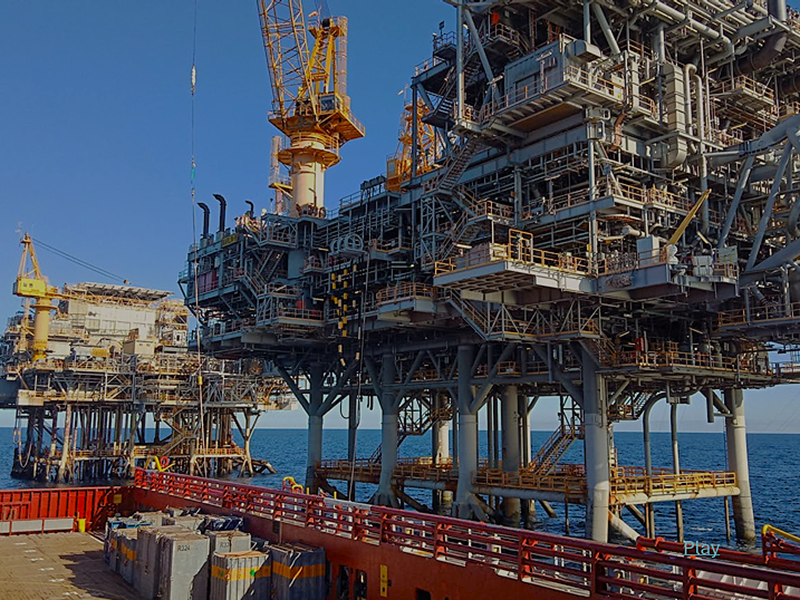
After more than half a century of offshore oil and gas production, Victoria is entering a new and complex chapter: the large‑scale decommissioning of ageing platforms, wells and pipelines in Bass Strait and the Otway Basin.
The Legislative Council Environment and Planning Committee is investigating the scale and legal ownership structure of the infrastructure, including offshore wells, pipelines, high-pressure transmission and low-pressure distribution systems, and relevant projects in Commonwealth waters.
The task is vast, expensive and highly regulated, with significant environmental, economic and community implications for Gippsland and the state more broadly.
ExxonMobil Australia’s major projects manager Richard Perry told the Committee at a recent hearing that Victoria’s offshore oil and gas industry began in the 1960s with discoveries in Bass Strait, which went on to supply more than half of Australia’s crude oil and today still provides around 60 per cent of the gas supplied to south‑east Australia.
The Gippsland Basin joint venture, currently owned equally by ExxonMobil and Woodside, includes hundreds of wells, 19 platforms, extensive subsea facilities and more than 800 kilometres of pipelines.
Many of these assets are now at the end of their productive life.
'Following more than 50 years of delivering energy to Australia, 13 of our platforms and four subsea facilities and around half of all of our wells no longer produce oil and gas,' Mr Perry told the hearing.
ExxonMobil described the Bass Strait program as the largest offshore decommissioning effort ever undertaken in Australia. The first major phase is scheduled to begin in 2027, removing 13 non‑producing platforms and four subsea facilities.
'Just like all our activities in our industry, decommissioning is highly regulated with complex and robust regulatory processes involving a number of federal, state and local government bodies and independent regulators. We are currently undertaking a complex regulatory pathway to ensure we obtain all the required approvals from Commonwealth, state and local government regulators,' he said.
Using specialised single‑lift vessels, structures will be cut below the sea surface, lifted offshore and transported to Barry Beach Marine Terminal in South Gippsland, which has been selected as the onshore reception and dismantling site.
Around 60,000 tonnes of steel are expected to be recovered during this phase alone. Both ExxonMobil and Woodside told the hearing their preference is to recycle as much material as possible in Australia.
Unions told the inquiry that decommissioning offshore oil and gas infrastructure presents a significant opportunity for job creation in Victoria, particularly in Gippsland.
Victorian Trades Hall Council assistant secretary Danae Bosler said the process should be seen ‘not just as an obligation but as an opportunity’, arguing that the same union workforce that built and operated Bass Strait infrastructure over decades is best placed to carry out its removal.
Ms Bosler said national estimates suggest decommissioning could support about 3,500 jobs across Australia, with Victoria well placed to secure a substantial share.
‘We are boldly claiming that about a thousand of those jobs should come to Victoria if we have a proper decommissioning industry here on our coastline,’ she said, adding that strong policy settings were needed to ensure jobs and investment remained local.
The Maritime Union of Australia (MUA) said Victorian seafarers already have the skills required to safely dismantle offshore infrastructure and bring it ashore for recycling.
Victorian branch assistant secretary Aarin Moon told the Committee that workers who built and maintained the platforms were now best placed to remove them, creating new employment while maintaining critical maritime skills during the transition to offshore wind and other emerging industries.
Both the MUA and Trades Hall emphasised the importance of onshore processing and recycling to maximise economic benefits. MUA policy analyst Angie Moore said most employment generated by decommissioning would occur once infrastructure reached land, through dismantling, recycling and materials processing, with potential to support circular economy industries and low emissions steel production.
Go to the Committee’s website for the full terms of reference, submissions and to find transcripts of the hearings.
The Committee will report to Parliament by June 2026.