Moves to wind up cladding safety body
13 April 2026
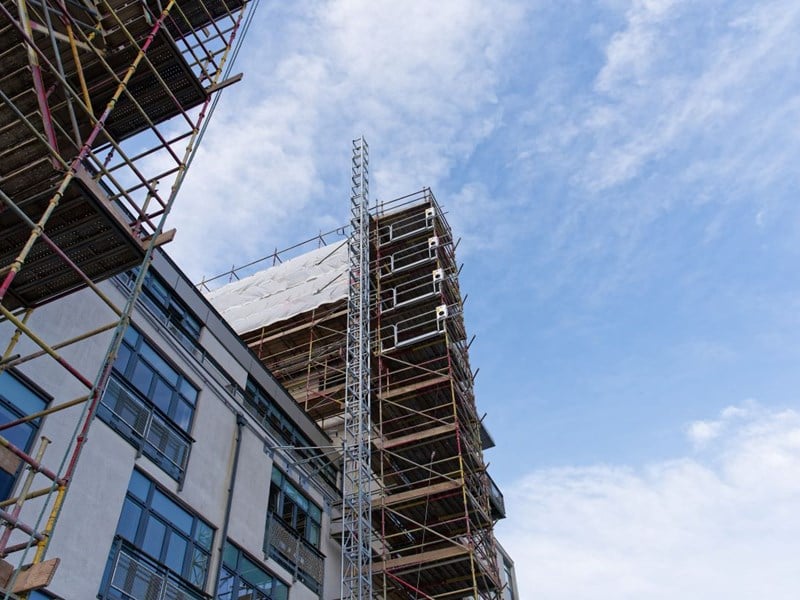
The Legislative Assembly has debated a new bill to formally wind up Cladding Safety Victoria, marking the final stages of the state’s response to the combustible cladding crisis that emerged after high‑profile apartment fires more than a decade ago.
The Cladding Safety Victoria Repeal Bill 2026 seeks to abolish Cladding Safety Victoria (CSV) as a standalone agency, repeal the Cladding Safety Victoria Act 2020, and transfer remaining responsibilities to the state’s building regulator, now transitioning into the Building and Plumbing Commission (BPC).
During her second reading speech Member for Dandenong Gabrielle Williams said CSV was established following the recommendation of a taskforce established in the wake of the 2017 Grenfell Tower fire in London as well as several cladding related fires in Australia.
“ 'CSV’s ground-breaking approach to identifying, assessing, classifying and treating combustible cladding risk has saved lives, and it has saved building owners hundreds of millions of dollars.' ”
Gabrielle Williams, Member for Dandenong
She said CSV, along with building owners, owners’ corporations and Fire Services Victoria, had completed remediation on more than 99 per cent of the highest-risk buildings in the Cladding Rectification Program.
According to figures cited in the chamber, more than 1,600 buildings, representing around 83,000 homes, have undergone cladding rectification since the program began.
'CSV’s ground-breaking approach to identifying, assessing, classifying and treating combustible cladding risk has saved lives, and it has saved building owners hundreds of millions of dollars. At the conclusion of its program of work, CSV will have improved building safety for all of us across Victoria,’ she said.
While the opposition has confirmed it will not oppose the bill, Coalition MPs raised concerns about the transition and the risk of unresolved works falling through regulatory gaps.
David Southwick, Member for Caulfield, said many people in his electorate were not covered by the Cladding Safety Victoria scheme, but still had to undergo rectification works.
‘We should not have individuals that are out of pocket as a result of this, particularly when this situation was not of their own cause,’ he said.
Member for Footscray Katie Hall said that transferring CSV’s remaining functions, staff and liabilities to the Building and Plumbing Commission and replacing the cladding rectification levy with a lower building permit levy would ensure ongoing oversight of the building industry and cost savings for industry and consumers.
‘This will enable a reduction in levy costs of between 47 and 66 per cent for affected building classes,’ she said.
Martin Cameron, Member for Morwell, told the chamber that in his experience in the building industry the the cladding materials were popular with builders and developers not only in Melbourne but right throughout regional Victoria.
‘We need to make sure that as we morph into and transform into another entity, we are doing the work that needs to happen not only here in Melbourne, because we do see a lot of high-rise buildings that have cladding on them, but also around regional Victoria, so that we are capturing every building that these products were used on,’ he said.
“ ‘It was a failure of government regulation that this flammable cladding was allowed to be imported and then was allowed to be installed on buildings,’ ”
Ellen Sandell, Member for Melbourne
Member for Melbourne Ellen Sandell, whose electorate includes many of the buildings affected by cladding, said she would reserve judgement on the bill’s success until it became clear how well the new regulator was resourced and how remaining cases would be handled.
While acknowledging that Cladding Safety Victoria had improved safety outcomes, she criticised what she described as years of regulatory failure that allowed flammable cladding to be imported and installed in the first place.
‘It was a failure of government regulation that this flammable cladding was allowed to be imported and then was allowed to be installed on buildings,’ Ms Sandell said.
She said apartment owners continued to face financial, emotional and legal burdens linked to building defects and owners corporation disputes, warning that unresolved issues could undermine confidence in higher‑density living.
The full debate is available to read in Hansard.
The bill will now go to the Legislative Council for further debate.