Support needed for apartment energy shift
27 April 2026
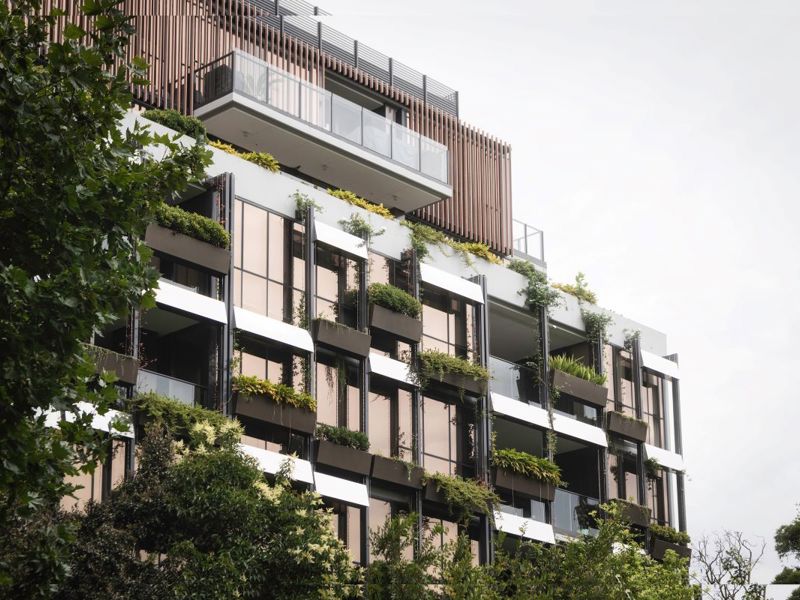
Apartment residents across Victoria could realise the benefits of renewable and affordable energy with the support of tailored policy, laws and funding models, a parliamentary inquiry has been told.
Evidence to the Legislative Assembly Environment and Planning Committee’s inquiry into renewable and affordable energy for apartments revealed that while detached houses have rapidly adopted rooftop solar and electrification, strata housing has lagged due to shared infrastructure, complex governance and limited decision‑making capacity.
'Energy infrastructure is shared, decisions are collective and responsibility sits with volunteer‑governed owners corporations,' Dr Janette Corcoran, board director of the Owners Corporation Network, told the inquiry.
'Energy policy has largely been designed around detached housing where individuals control their roofs, control their energy systems and control their investment decisions.'
Dr Corcoran said apartment buildings operate under fundamentally different conditions to standalone homes, with significant variation in size, age, design and ownership composition.
'Buildings vary in size. They vary in the construction era. They are at different lifecycle stages, and their ownership composition differs significantly,' she said. 'They must have different transition pathways.'
Witnesses said collective decision‑making frequently slows or prevents renewable energy upgrades. Significant works typically require alignment with annual general meetings, maintenance plans and budget approvals, often combined with special resolutions.
'Agreement takes time,' Dr Corcoran said. 'You will need to align that with the AGM cycle.'
She said owners corporations are also financially constrained.
'Owners corporations are not‑for‑profits,' she said. 'They are funded primarily through the levies set in annual budgets and approved at AGMs. These budgets are already covering significant and rising costs.'
The inquiry heard that renters living in apartments are particularly disadvantaged.
'Thirty per cent of Victorians rent, and 48 per cent of Victorian rental properties are either apartments, flats or semidetached dwellings,' said Damien Patterson, director of policy, advocacy and engagement at Tenants Victoria.
He said current strata laws give renters little say.
'Currently the Owners Corporations Act provides limited ways for renters to engage with owners corporations or to participate in decision-making that may impact their quality of life and finances, such as decisions about energy and upgrades,' he said.
He said renters often become trapped between tenancy law and strata governance.
‘Oftentimes a renter will seek a repair or an upgrade in line with what the Residential Tenancies Act says that they should have, and the landlord is seen to be fulfilling their responsibilities if they communicate that request to the owners corporation. The owners corporation does not have an obligation to meet that obligation that is on the residential rental provider,’ he said.
Older renters told advocates that exclusion from renewable energy is worsening energy stress and health outcomes.
'The older people that we work with predominantly live in housing that they do not own, so this means that they have been largely excluded from this transition,' said Fiona York, executive officer of the Housing for the Aged Action Group.
'They tell us how this impacts them, so sweltering through hot summers and freezing in the winter, and how this worsens or actually even causes health conditions,' she said.
Ms York told the inquiry that high energy costs combined with fixed incomes are forcing difficult choices.
'People are having to choose between paying the bills and meeting their costs of living,' she said.
She also raised concerns about embedded energy networks (a private energy supply arrangement where a single connection to the grid supplies electricity to multiple dwellings within a building, with energy on‑sold to residents by a building owner or network operator).
'They report higher costs, inability to choose lower‑cost providers on the open market and a really cumbersome process to be able to obtain energy concessions,' she said.
Even where support exists, upgrading older apartment buildings can be technically challenging.
'In older buildings, documentation, including wiring plans, is often incomplete or inaccurate,' Dr Corcoran said. 'Issues are only discovered once works are committed.'
She said retrofit solutions remain limited and service providers often add a 'complexity premium' when working in strata environments.
Mr Patterson said renters want access to renewable energy but lack meaningful pathways.
'Renters are responsible for their energy bills,' he said. 'Anything that can be done, like solar energy, to make the property more affordable would be really beneficial.'
Dr Corcoran said apartments must be included in Victoria’s energy transition.
'Apartments are a key and growing part of Victoria’s housing system,' she told the inquiry. 'They must be part of the energy transition.'