Bill to end group voting tickets debated
6 August 2026
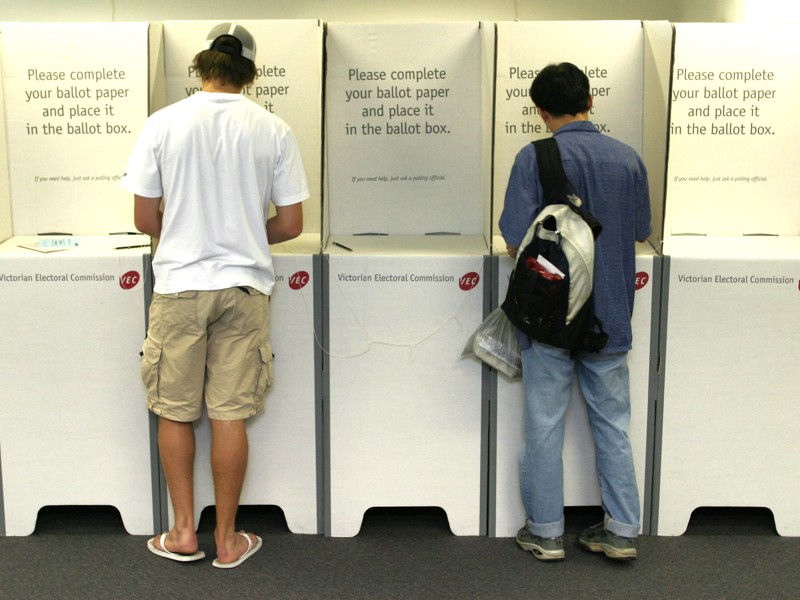
The Legislative Assembly has debated measures to abolish group voting tickets, a reform designed to end preference harvesting and backroom preference deals in upper house elections.
The Electoral Amendment (Miscellaneous Matters) Bill 2026 will overhaul Victoria's Legislative Council voting system by scrapping group voting tickets (GVTs), a mechanism critics say has allowed candidates with only a fraction of a quota to secure election through complex preference arrangements rather than direct voter support.
In his second reading speech Member for Ivanhoe Anthony Carbines said an inquiry by the Electoral Matters Committee had found two major concerns related to GVTs.
‘Voters do not understand how their votes will be distributed when they vote above the line, and the results do not reflect voters’ preferences,’ he said.
He gave the example of two candidates elected in 2018 with less than 1 per cent of the first-preference votes.
‘GVTs give parties and candidate groups significant control over the distribution of voting preferences, producing results where candidates with very low numbers of primary votes win seats in the Council due to the distribution of preferences,’ he said.
The reform would replace Victoria's current system with preferential voting above the line, allowing voters to select multiple parties above the line, bringing Victoria into line with the federal system.
The legislation is aimed squarely at the practice known as "preference whispering", in which minor parties negotiate intricate preference deals designed to funnel votes towards candidates with limited primary support.
The reforms are designed to ensure electoral outcomes are determined by voters rather than political operatives capable of navigating the preference system.
‘Outcomes will no longer be determined by behind-the-scenes negotiations that are not transparent and ultimately do not reflect voters' preferences,’ he said.
Member for Brighton James Newbury said Victoria had lagged behind the rest of the country in addressing problems with the system.
‘We support the stopping of gaming the system,’ he told the Legislative Assembly.
‘We have believed for a very long time that votes should not be gamed.'
“ ‘Outcomes will no longer be determined by behind-the-scenes negotiations that are not transparent and ultimately do not reflect voters' preferences.' ”
Anthony Carbines, Member for Ivanhoe
Mathew Hilakari, Member for Point Cook, described the existing arrangements as fundamentally flawed, arguing they had produced outcomes that voters would not reasonably expect when casting their ballots.
‘It has been a process of voting which is discredited, in my view, a process that does not lead to democratic outcomes,’ he said.
‘Victorians deserve to control where their preferences go.’
He rejected suggestions that preference harvesting systematically benefited one side of politics, pointing to examples where Labor, Liberal and Greens candidates had all lost seats despite significantly higher primary vote totals than successful micro-party candidates.
‘Under the current system parties can direct preferences and how they flow through group voting tickets, and it means upper house members win from deals, not necessarily with support on the ground,’ he said.
Member for Lowan Emma Kealy said the current arrangements created opportunities for voter confusion and manipulation through misleading party names and opaque preference deals.
'We cannot have a voting system where there may be deliberate misleading or vote whispering which would mislead voters from where their vote was intended,' she said.
She pointed to examples from previous elections where voters may not have understood how preferences would ultimately flow.
‘There have been circumstances where the names of parties have been deliberately misleading in order to attract preferences and votes that are not immediately transparent on the voting ticket,’ she said.
‘We do not want a democratic system whereby there can be such straightforward, blatant deception of voters.’
Member for Tarneit Dylan Wight, who chaired the parliamentary inquiry into Victoria's upper house voting system, said evidence received by the committee overwhelmingly supported abolition.
‘If we were going to continue to use this system to elect upper house members here in Victoria then it would seriously call into question the integrity of our democracy,’ he said.
“ ‘We do not want a democratic system whereby there can be such straightforward, blatant deception of voters.’ ”
Emma Kealy, Member for Lowan
Tim Read, Member for Brunswick said he had spoken repeatedly in parliament about the issue since entering politics in 2018.
‘I rise to give enthusiastic support to this long-needed reform to our democracy,’ he said.
He was particularly critical of the role played by preference brokers in Victorian elections, who he said charged $50,000 to construct preference deals.
‘Upper house seats were bought for as little as $50,000 by manipulation of group voting tickets,' he said.
‘The thought that for less than the price of a Hilux you could get yourself a four-year job on the red chairs, I thought that was just about as bad as the entirely legal but corrupt preference-trading cartel {could be]'.
Beyond abolishing group voting tickets, the bill contains a range of electoral administration and political finance reforms.
The Victorian Electoral Commission would be required to publish additional information about newly registered political parties and historical public funding repayments. The legislation also clarifies several donation, funding and compliance provisions introduced through earlier electoral finance reforms.
The bill is due to be debated in the Legislative Council during the next sitting week.
The Legislative Assembly debate can be found in Hansard.