An age-old voting dilemma
4 December 2025

At 16, you can get a job, pay taxes, and receive an adult sentence. But cast a ballot?
The recent announcement that the United Kingdom intends to lower the voting age to 16 has renewed debate over whether Australia should do the same or keep the ballot box off-limits until 18.
The 1970s saw the voting age lowered from 21 to 18 at federal and state elections. The war in Vietnam had bred deep cynicism—18-year-olds could be conscripted to fight overseas yet were not trusted to elect the government sending them there.
Now, urgent long-term challenges facing young people, from climate change to growing international tensions, recognition of their imbalanced legal rights, and the newfound accessibility of information through technology and social media have given impetus to again extend the franchise, this time to those aged 16 and 17.
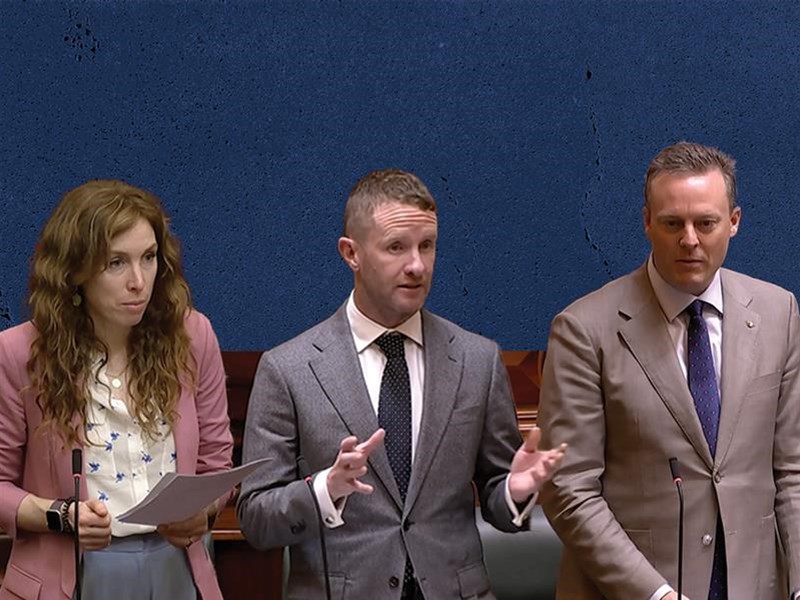
The proposal is strongly supported by the Greens. According to their Deputy Leader in the Victorian Parliament, Dr Sarah Mansfield, the Greens’ advocacy is rooted in the belief that Australian democracy is ‘strengthened by more people being part of that democratic process and being able to have a say’.
She posits that young people ‘by virtue of their age have a much bigger stake in the future’, and therefore should be entitled to a formal voice to help shape the decisions that will impact it.
Under the Greens’ plan, an optional right to vote would be extended to 16- and 17-year-olds; they would neither be required to vote like those 18 and above are, nor fined for choosing to abstain. In August 2022, they introduced into the Victorian Parliament an unsuccessful amendment to the Local Government Act to this effect. This was opposed by both the Labor Government and the Coalition.
With no change expected prior to the next state election, the issue is not currently featuring in parliamentary debates. Individual parliamentarians, however, have expressed their own views when questioned on the subject.
‘I think 16- and 17-year-olds have the capacity to work their way through and figure out complex policy and what their position is on it,’ Labor MP Dylan Wight explained. ‘So I don’t subscribe to the view that 16-year-olds aren’t mature enough to hold a vote.’
He contended that if a 16-year-old can be trusted with responsibilities like learning to drive a car, then they should be trusted to engage with complex policy decisions and entitled to vote, especially given the long-lasting effects government policy can have on people’s lives.
Although leaning against the proposal, Liberal MP Chris Crewther takes a relatively neutral stance. While acknowledging that many young people are politically aware, he expressed a personal view that ‘having a bit more life experience’ before voting is beneficial.
He raised concerns about a general lack of understanding, not just among youth but across all age brackets, around how the Australian system of government works. Himself a former participant in Victoria’s Youth Parliament, Mr Crewther tends to support enhancing civics education and opportunities for youth participation before considering an expansion of suffrage.
‘I think the opportunity to get more educational work and life experiences is better supported before lowering of the voting age,’ he said.

A range of factors, including potential electoral advantage, may determine whether the issue gets any traction going forward. Voting trends among young people may influence whether support for lowering the voting age gains broader support in the future.
Nonetheless, Mr Wight asserts ‘you shouldn’t make these decisions for political gain’.
According to Dr Mansfield, lowering the voting age would not unduly benefit any particular party. She suggests that, if the change were made, politicians’ electoral fortunes would ultimately depend on how responsive their policies were to the needs and concerns of young people.
It would force ‘those running for election to take more seriously the views of younger people,’ she said.
Lowering the voting age could be a matter for future consideration by Victoria’s Electoral Matters Committee, which conducts public inquiries into the conduct of state elections and broader electoral issues. It has recently examined reforms to the upper house voting system and the conduct of by-elections in Prahran and Werribee.
Any renewed push to consider the matter will need to address a fundamental tension: between supporters’ belief in young people’s political perspicacity and opponents’ wariness about their readiness to assume the full responsibility of the ballot.
For the time being, 16 may be sweet, but it remains disenfranchised.
About the Author

Luke McAlister
A participant in the Parliament Express program conducted by the Parliament of Victoria in partnership with Express Media. The program provided mentoring and engagement experiences, leading to a series of articles written by young Victorians for the Victorian Parliament's website.