Juggling the pressures of public life
4 September 2026
Faced with heavy schedules and growing levels of online abuse, parliamentarians draw on a range of supports and tactics to meet the demands of the job.
Under the watchful eye of the public, members of parliament juggle pressures both personal and public facing.
‘I could be studied for this,’ jokes Georgie Purcell, Member for the Northern Victoria Region, who is also the only sitting member of the Animal Justice Party.
Aside from serving the largest region in the upper house and chairing a committee, Purcell has recently had a baby.
She co-ordinates childcare with her partner, Josh Burns, who is a federal MP in the Labor government.
‘We have a rental in St Kilda where we stayed during my sitting weeks…by the time I got back there, I was doing bath at midnight, sterilising bottles, bed by one AM, back up the next morning at six to bring her back to work.’
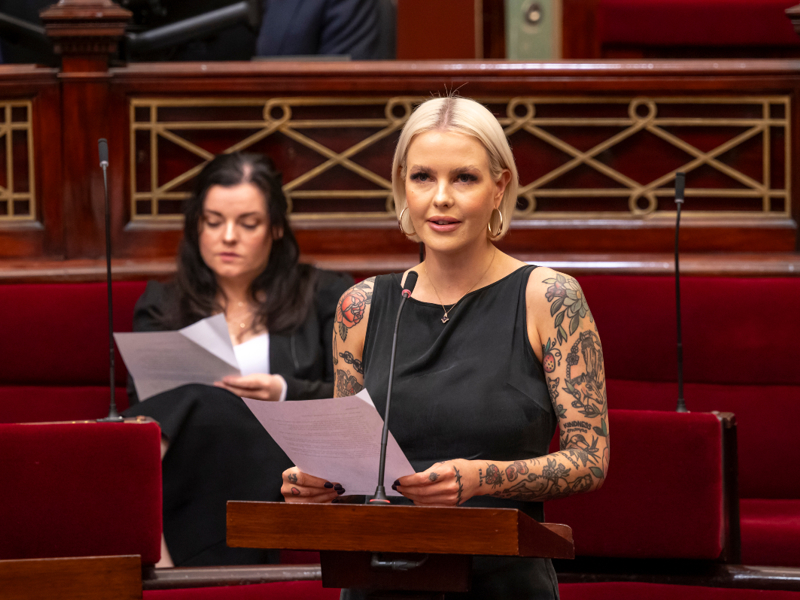
The unique demands of her crossbencher role brought Purcell back to work less than four weeks postpartum—but Parliament’s flexibility allows Purcell to bring her daughter to work, so the MP ‘didn’t have that really critical time away from her’.
Ministerial roles come with their own pressures.
Labor MP for Macedon Mary-Anne Thomas, who started as Minister for Health in June 2022 and stepped down from the role in April, describes the strain dealt by a post-COVID workforce.
Each day, Thomas was briefed on the number of healthcare workers furloughed due to coronavirus infection—which could be as many as 2000.
‘While on the face of it things had gone back to normal, the health system was really feeling pressure.’
One of the hardest parts of being Health Minister, Thomas says, is meeting with grieving families who have lost children.
While an essential part of the role, others’ trauma is a heavy burden to bear.
Thomas’s coping strategy is to turn hurt into action.
‘I actually found signing briefs and doing my correspondence quite a therapeutic sort of exercise…it would give me a sense of feeling like, okay, we're making some progress here,’ she says.
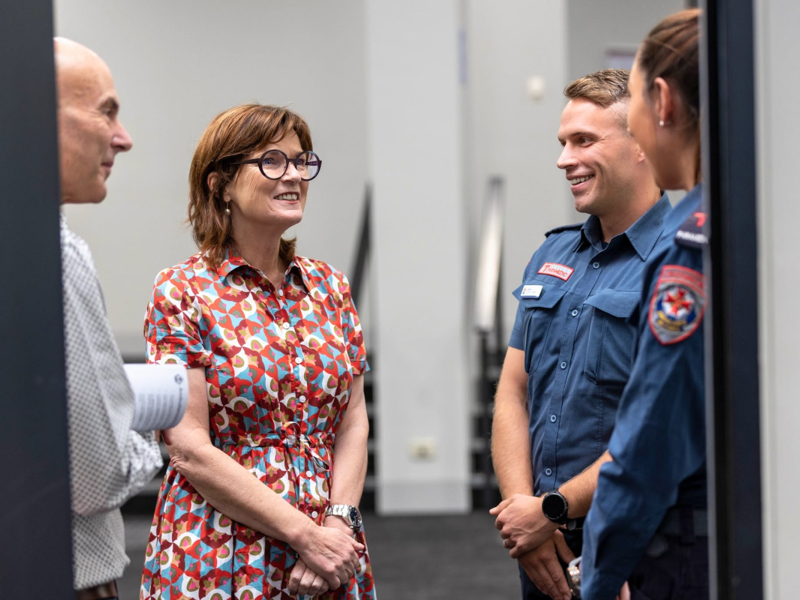
For things like having a stumble on public radio, or getting blasted by the opposition, Thomas tends not to waste her energy.
‘I’ve got better at just letting things go.’
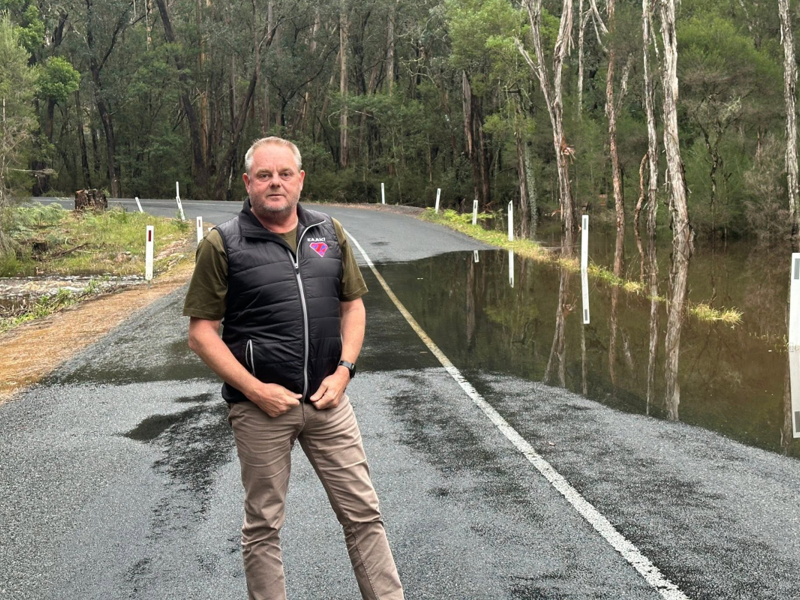
This philosophy rings true for Tim Bull, the Nationals MP for Gippsland East, who has held his seat since 2010.
‘I'm probably the sort of person that doesn't worry too much about what other people say about me,’ says Bull.
In fact, if someone is spouting hate on Bull’s social media pages, he likes to call their bluff.
He invites them out for coffee.
‘I’ve probably had 100 refusals, or no response,’ Bull says—though one person said yes.
But Bull also has sympathy for people who resort to online abuse, since he figures they’re dealing with ‘bigger issues’ in their personal lives.
While a compassionate view is admirable, many MPs find that, in practice, their sympathies must be weighed against the risks.
Both Purcell and Thomas no longer advertise their whereabouts in advance, and Purcell’s electorate office is open by appointment only.
‘Our security advice is to not have walk-ins,’ says Purcell, ‘which is a real shame because it actually gives you a political disadvantage compared to your opponents, because it doesn’t look like you’re as accessible to the community.’
A 2023 study of Victorian MPs found that nearly all MPs who used social media had experienced online abuse, and that threats of physical and sexual violence, as well as gender-based abuse, were overwhelmingly directed at female MPs.
Netizens have told Thomas she’s part of the ‘housewives' government’ or made fun of the gap between her front teeth.
‘The problem with this is not so much about me, but it's just that once your social media feed is full of negative comments or personal attacks, no one else will come on, because it's not a safe place.’
Purcell receives particularly vitriolic abuse, in part due to her large public profile.
‘I’ve got quite a colourful past. I’m younger. I look different,’ she explains.
Purcell was selected to test a new AI tool, Social Protect, that she has now adopted for herself and her office.
Designed by former ASIO agent Shane Britten, Social Protect filters out social media abuse in real time, deleting comments and collating them in a separate app that the user can choose to view at their discretion.
Purcell says one of the worst parts of her job is speaking with young women who say, 'I’d really love to do what you do, but I just couldn’t handle the way you get treated'.
While Thomas doesn’t use the AI tool, she has social media word filters turned on and has become disillusioned with the online ecosystem.
‘I've got to tell you that when I leave politics, I'll be leaving social media,’ she says.
Thomas is reticent to speak on how abuse affects her mental health.
‘I think it would be political suicide for women to ever admit that the job takes a toll on them.’
To support MPs and officers alike, Parliament offers an employee assistance program (EAP).
Bull says that when a close friend—another MP—was experiencing mental health challenges, Parliament was ‘absolutely terrific in the support that it gave him over an extended period’.
Purcell, however, believes that overall support is ‘incredibly lacking’ and that the EAP is unlikely to see widespread uptake.
One reason for this may be that MPs are more likely to seek support from private practitioners than in a work-related setting.
‘Politics is a very public job, so private things become really, really important to be kept private,’ says Thomas.
Bull hopes that any MP would feel comfortable seeking mental health support, while Purcell argues for change.
‘Until we can actually make this job more accessible, more enticing, we’re going to get the same old people coming through here and not the diversity of voices that actually makes a really great Parliament.’
About the Author

Harriet Grummet
A participant in the Parliament Express program conducted by the Parliament of Victoria in partnership with Express Media. The program provided mentoring and engagement experiences, leading to a series of articles written by young Victorians for the Victorian Parliament's website.