Community at the core of politics
8 October 2026
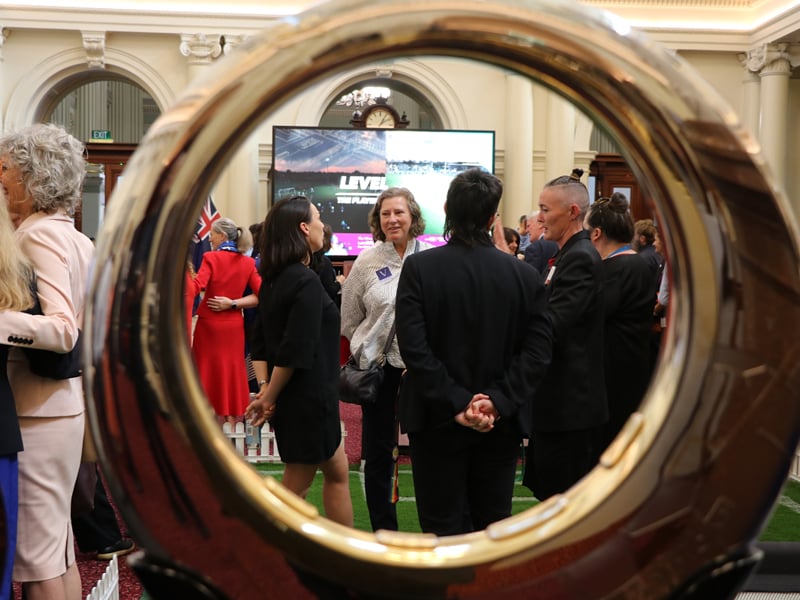
Despite varying backgrounds and pathways into politics, a common purpose can be found among three women MPs with different political allegiances.
For Anasina Gray-Barberio, Eden Foster and Bev McArthur, community remains both the motivation for entering politics and the lens through which they approach their work, even as each brings a distinct perspective shaped by their own experiences.
When Anasina Gray-Barberio speaks about politics, it’s rarely about herself. Instead, she speaks about her community.
‘Always bring it back to the community,’ says the Greens MP for the Northern Metropolitan Region.
As the first Pacific Islander elected to Victoria’s state Parliament, Gray-Barberio was raised with a cultural perspective rooted in communal values.
With a strong sense that inequality leads to injustice, she was drawn to politics because of concerns about power being exercised inequitably.
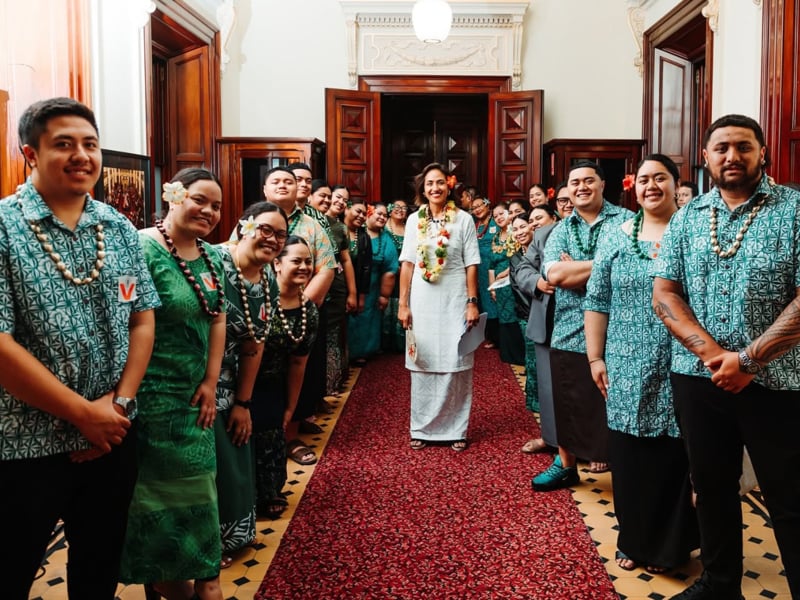
Coming from what she describes as an underrepresented community, Gray-Barberio believes access can be a barrier to participating in politics.
‘Unless you know someone who’s involved in the system, it can be difficult to find pathways,’ she says.
She considers herself fortunate that someone told her about the Pathways to Politics program that offers training, workshops and mentoring to support women achieve political office.
While it was daunting to step into a political space where she had little precedent to follow and few role models, she is now vocal about the idea that ‘being the first is okay too’.
With a headstrong and determined mindset, her community-focused approach to legislation and holding government accountable centres on a simple proposition: whose voice is not represented, and whose communities are disproportionately affected?’
Gray-Barberio declares she is anchored by the lived experiences of the communities she represents, who are not only her constituents or Pacific Islander communities, but anyone who has experienced marginalization or a shared struggle.
‘Policy disproportionately impacts different communities,’ she asserts.
She maintains close connections with various communities by hosting events, attending many gatherings and creating spaces where people can engage with politics on their own terms.
Grey-Barberio sees this as a form of reciprocity — a way of rebuilding trust in a political system she believes has left many people feeling behind.
And in a system where numbers and resources can shape influence, she sees collective effort as essential to navigating the prevailing power dynamics.
For Eden Foster, her path into politics grew from both community service and professional experience
‘It was about being part of my community, so participating in my community and giving back to my community,’ says the Labor MP.
As a former clinical psychologist, Foster’s experience working with vulnerable communities gave her a deep understanding of how vulnerability shapes people’s lives. It’s a perspective she carries into policy and political decision-making.
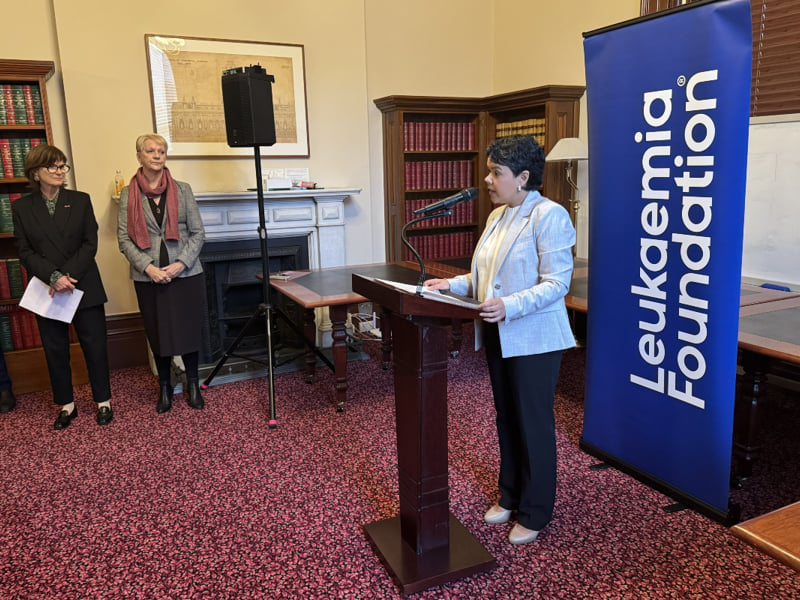
Commencing her political career in local government as a councillor before becoming mayor, she describes the experience as a great stepping stone that exposed her to the realities of politics.
She remembers events she attended where recognition and respect were not immediately forthcoming.
‘I’ve introduced myself as Eden and perhaps got a bit of a cold shoulder, or not been recognised or engaged with, until I’ve had to tell them that I’m the mayor,’ she recalls.
What struck her was the immediate shift in people’s demeanour once they found out about her role.
‘It can be quite offensive because you think, well, is it because I’m a woman?’
Yet those experiences did not diminish Foster’s commitment to public life. Instead, she draws on her background in psychology to remind herself of the value of the perspective she brings.
‘Don’t doubt your significance, don't doubt your input,’ she says.
She reminds herself that she brings valid experience and a set of skills that others may not have, but which are just as crucial and needed.
‘There are more loving and caring people out there than people who want to divide us,’ she says.
Foster experienced that when running in the Mulgrave by-election that brought her into Parliament, gaining a lot of mentorship and support during her campaign.
Professional experience and connection to community also led Bev McArthur into politics.
Working in a small business almost 50 years ago, she was astounded by the amount of regulation she had to comply with.
‘Somebody said to me, “you need to get involved in politics to change the world”,’ she recalls.
Describing herself as a born and bred country girl, McArthur says her background shaped her understanding of the challenges her community faces.
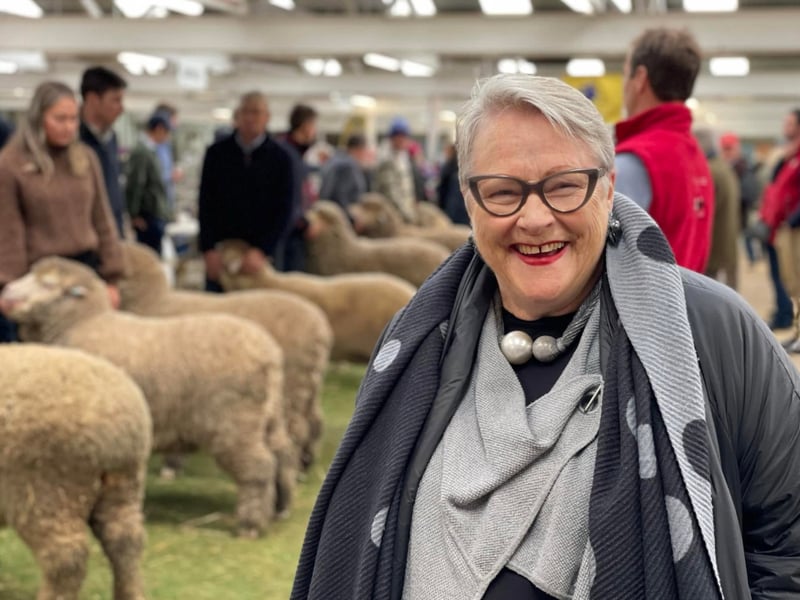
Like Foster, McArthur was involved in local government before entering state Parliament as the Liberal MP for Western Victoria. Being a councillor gave her a firsthand understanding of the difficulties regional communities face.
She describes her community members as people who ‘just get down to work’. Her political career is guided by the philosophy of ‘reward for effort’, ensuring her constituents receive a fair return for their work.
McArthur argues that Parliament benefits from broad representation.
‘What we need is a mix of people: all ages, all backgrounds, both men and women, both country and from the city,’ she says.
McArthur also believes the growing presence of women, particularly mothers, has strengthened the institution.
‘Parliament is better for having women in it and having women with young children,’ she says.
She describes having children as the greatest honour any woman can have and believes the increasing presence of mothers in politics is helping shape Victoria’s future.
‘We have come a long way and the young mothers that we have in this Coalition are contributing greatly to making Victoria a better place.’
About the Author

Benita Paul
A participant in the Parliament Express program conducted by the Parliament of Victoria in partnership with Express Media. The program provided mentoring and engagement experiences, leading to a series of articles written by young Victorians for the Victorian Parliament's website.