Community voices making a difference
13 September 2026
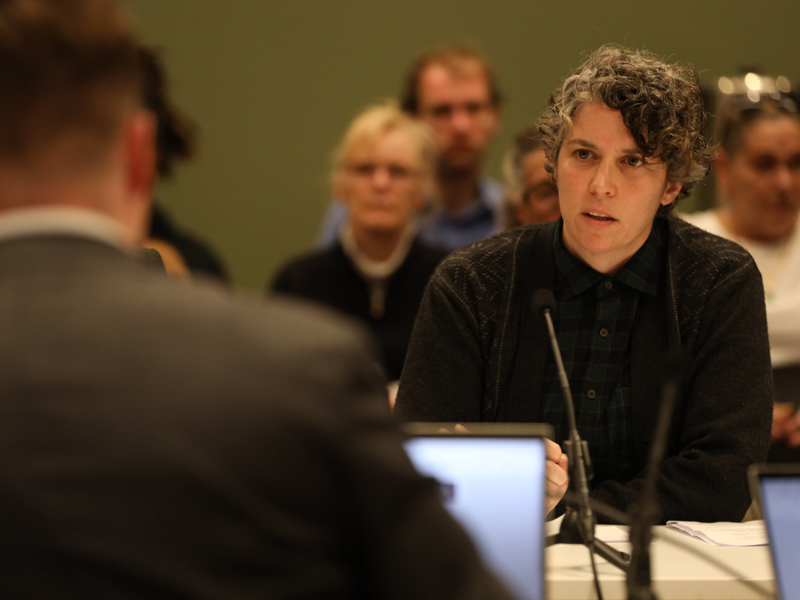
The lived experience of community members is playing an increasingly significant role in parliamentary inquiries, according to MPs on a key upper house committee.
Recent inquiries conducted by the Legislative Council Legal and Social Issues Committee have gathered evidence from a diverse range of perspectives to produce reports which provide a roadmap for informed change.
These have included investigations into contentious issues affecting Victorians, including the redevelopment of public housing towers, the management and functions of Ambulance Victoria, and anti-LGBTQIA+ hate crimes.
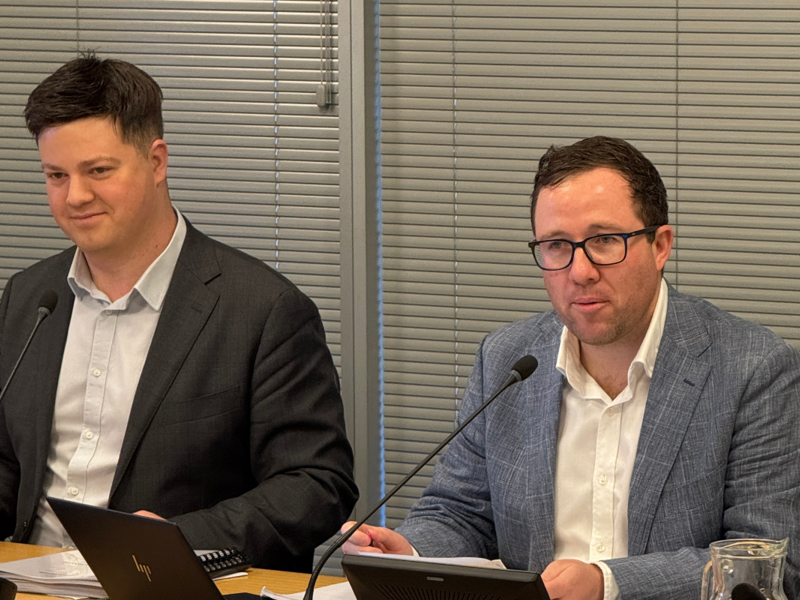
‘Sometimes, you get the sense that there’s a lot of anger about a specific aspect of an inquiry which can add weight to its consideration,’ said Committee Chair and Liberal MP Joe McCracken.
Tasked with hearing and learning from the lived experiences of the public as well as considering expert and stakeholder perspectives, committees can effect critical change for the community.
Lived experience is increasingly being viewed as the key to creating policy that effectively addresses the needs of affected community members.
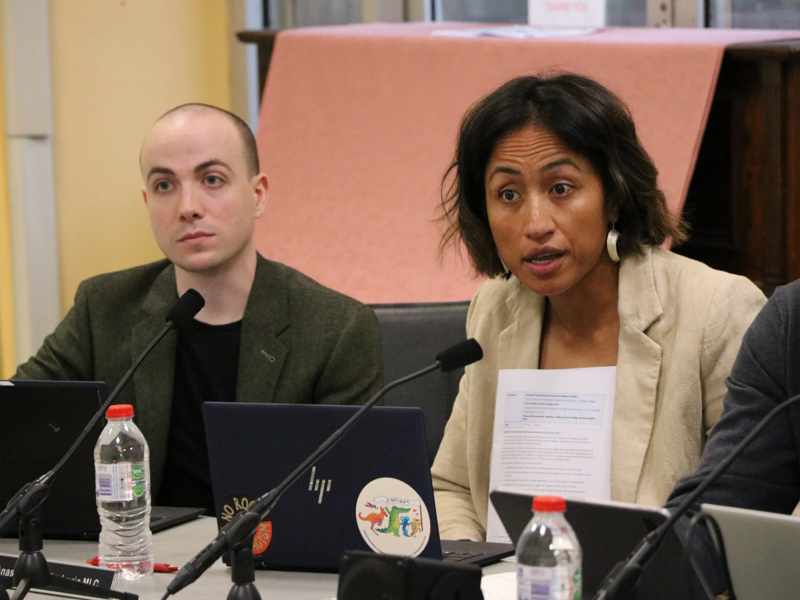
‘We’ve got to make sure that people’s experiences are validated, that they’re centred and amplified,’ said Committee member and Greens MP Anasina Gray-Barberio.
‘It’s the social issues that impact people so it’s really important to always consider that human impact.’
Committee processes can act as a conduit to fresh insight by unearthing hidden concerns and generating new ideas to equip lawmakers with a better understanding of an issue.
Community submissions form the basis of many of the findings and recommendations contained in committee reports. In this way, committees play a key role in uplifting community voices in Parliament.
However, as investigations by the Legal and Social Issues Committee have covered complex and challenging matters relating to community services, health, law and justice, it has been a daunting task for some community members to make submissions.
Trauma and fear are just some factors which may hold community members back from participating, in some cases proving a significant barrier to incorporating the breadth of lived experience in reports.
This was evident during the inquiry into anti-LGBTQIA+ hate crimes. According to Committee Deputy Chair and Labor MP Michael Galea, the challenging subject matter gave rise to a disconnect, with a comparatively low amount of submissions compared to the known number of incidences.
‘Many of the victims did not want to come forward for various understandable reasons,’ he said.
Alongside community submissions, MPs also recognise the importance of expert evidence that presents facts and analysis from a variety of organisations, helping to provide a better understanding of an issue.
According to Gray-Barberio, expert submissions provide a perspective outside of lived experience which can help the Committee ‘to substantiate or challenge these human experiences’ in the broader context of the issue.
‘The stakeholders that appear and the witnesses that come before the hearings, they bring such expertise and niche understanding of a topic,’ she said.
McCracken noted that data provided by experts was crucial during the Ambulance Victoria inquiry for bringing the multi-party Committee to a consensus on certain recommendations.
‘Whether it’s response times, whether it’s call out rates, those sorts of things can’t really be argued,’ he said.
According to Galea, this diversity of perspectives helps Committee members to make more informed decisions when it comes time to make recommendations which represent the inquiry’s findings.
‘You do always try to keep yourself open to change and so quite often views have been reinforced and quite often they have been overturned or changed as a result of the evidence that you see,’ he said.
Members from across the Legal and Social Issues Committee emphasise their desire for enhanced public engagement with committee inquiries.
‘We see all the submissions that come through,’ McCracken said. ‘However big or small it might be, if someone’s interested in making a submission, they’re important.’
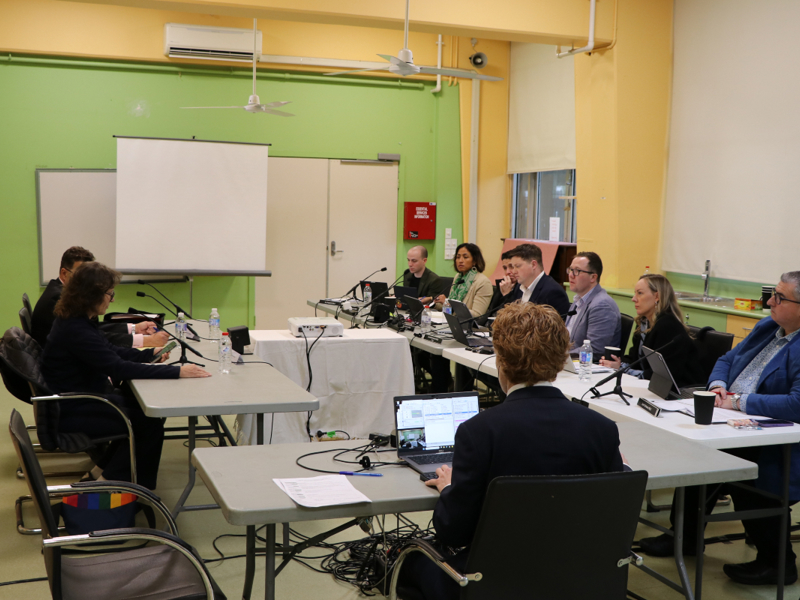
For Galea, participation in committee inquiries is an opportunity for community members to scrutinise government decisions
‘Committees are brilliant for highlighting issues and forcing governments to respond,’ he said. ‘In rejecting or indeed accepting recommendations, it will give its reasons for doing so and that’s an important part of the accountability mechanism.’
Gray-Barberio urged community members to use the committee process to push for reform.
‘This is how you can advocate for change,’ she said.
Acknowledging the barriers which certain community members may have to participation, Gray-Barberio points to various accessibility measures provided by the Committee secretariat, such as translation assistance.
Forming part of a mechanism that values lived experience and helps amplify community concerns, the Legal and Social Issues Committee serves an important role providing informed insight to the Victorian Government on a variety of complex issues.
About the Author

Neve Tsitas
A participant in the Parliament Express program conducted by the Parliament of Victoria in partnership with Express Media. The program provided mentoring and engagement experiences, leading to a series of articles written by young Victorians for the Victorian Parliament's website.