Critical minerals offer big returns with a small footprint, experts say
21 September 2026
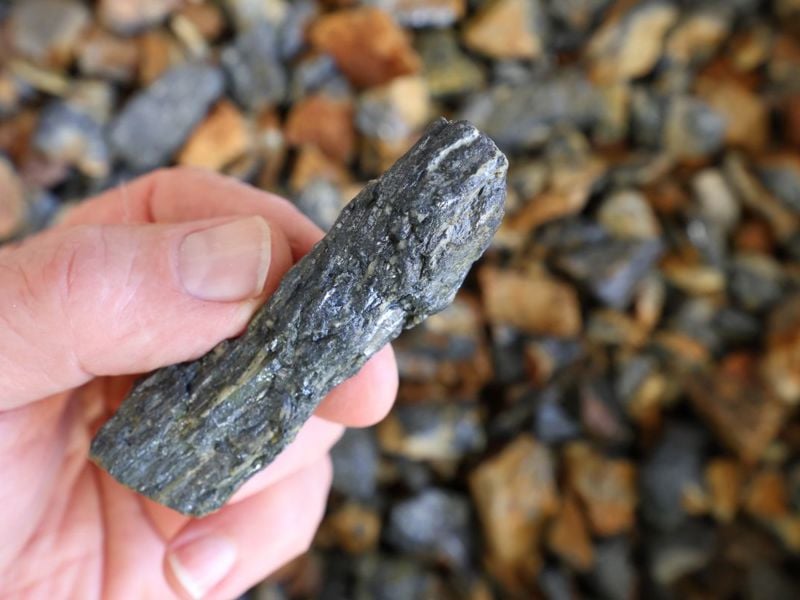
As global demand for critical minerals continues to grow, Victoria faces important decisions about how its mineral resources should be developed.
Can Victoria expand its critical minerals sector without sacrificing its agricultural strength? That question was at the centre of discussion during the Victoria’s Most In-Demand Minerals and Rare Earths seminar at Parliament House, where industry experts argued that mining and farming need not be competing land uses.
Speaking at the event, Dr David Whittle, co-founder of the Critical Minerals Consortium, and Sandy Gray, Technical Director at Gekko Systems and Gaia EnviroTech, highlighted Victoria’s significant mineral wealth and the economic opportunities tied to the global race for critical minerals.
Dr Whittle noted ongoing exploration for gold, antimony, rare earth elements, copper, lithium and other strategic minerals in the state. While much of the state's mineral wealth remains undiscovered, current estimates suggest substantial in-ground values across a range of commodities, including gold, copper, rare earths and antimony.
According to Dr Whittle Victoria's mining contribution to Gross State Product last year was $3.7 billion, while occupying a relatively small area of land in comparison with agriculture.
He suggested expanding mining would deliver economic benefits but have only a limited impact on agricultural production.
‘You barely impact agriculture overall. It's because mining has such a tiny footprint,’ he said.
Gray provided the example of the Fosterville Gold Mine, which for several years was among the highest-grade gold mines in the world. He explained that the economic value generated from a relatively small mining area could equal centuries of farming output from the same land.
‘For every year they mine there, it would take 200 years to produce the same value from that land, he said.
In Victoria, where agricultural land is highly productive, Dr Whittle acknowledged that there's often competition for land between mining and agriculture.
‘If you tripled the size of the mining industry, you'd add $7.4 billion to total factor income in mining, and you'd lose $0.1 billion in agriculture,’ Dr Whittle said.
However, Mr. Gray said that resource development requires cooperation, describing mining as a joint project between the company, government, and community.
‘There is this conflict. People want to set up mines and the question from a state perspective is what makes sense economically,’ Dr Whittle said.
Beyond extraction, Gray argued that Victoria has an opportunity to capture more value by processing minerals locally. Currently, many mineral concentrates are shipped overseas for refining, resulting in the loss of a significant share of economic value. Developing downstream processing capability for commodities such as antimony and rare earths could create jobs, strengthen manufacturing and support supply chains for defence, aerospace and advanced technologies.
The seminar also highlighted the growing strategic importance of critical minerals. With global demand increasing and governments seeking alternatives to concentrated international supply chains, Victoria’s deposits of antimony and rare earth elements are attracting renewed attention.
As Victoria seeks to balance economic development, environmental management and food production, critical minerals may prove to be an important part of the state’s future alongside its fertile fields.