Misinformation slowing EV uptake, inquiry finds
3 June 2026
Read the report
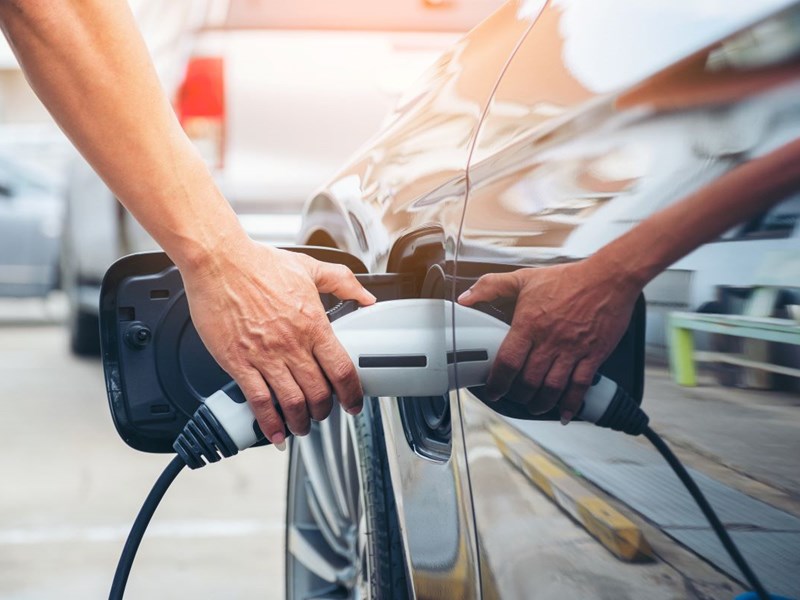
Misinformation and misconceptions about electric vehicles and electric vehicle charging infrastructure are affecting Victoria’s ability to accelerate the uptake of electric vehicles, a Legislative Council inquiry has found.
The Legislative Council Economy and Infrastructure Committee’s report into the harmonisation of electric vehicles with Victoria’s electricity supply and demand includes 109 findings and 40 recommendations.
While more than 16 per cent of new cars sold in Australia during April were fully electric, that still lags the global average of 25 per cent of new car sales.
To help support the uptake of EVs the Committee has recommended the Victorian Government undertake a public education campaign to address misinformation and misconceptions about electric vehicles.
The Committee identified several persistent myths affecting consumer confidence, including concerns about driving range, charging infrastructure, fire safety, battery lifespan, government revenue impacts, and environmental benefits.
Range anxiety and charging fears
One of the most common concerns is so-called “range anxiety”, the fear that EVs cannot travel far enough on a single charge. However, the inquiry heard that this anxiety is often overstated. Modern EVs typically offer ranges of 400 to 500 kilometres, with some models exceeding 600 kilometres, far beyond early models from the 2010s that averaged around 100 kilometres.
Ross De Rango of Vehicle Charging Solutions Australia told the inquiry that the infrastructure already exists to make long-distance driving viable in Victoria.
‘The distance from, say, Orbost to Cann River is about 75 kilometres. The typical EV has a range of hundreds of kilometres, and in both Cann River and Orbost there are fast chargers. So if you are a driver from Melbourne, or indeed if you are a driver from Orbost and you are driving back and forth on that route, there are fast chargers conveniently spaced,’ he said.
The Committee heard evidence that most drivers travel around 40 kilometres per day, meaning many EV owners only need to charge once a week. Around 80 per cent of charging occurs at home, usually overnight, reflecting a different usage pattern than petrol vehicles.
Fire safety misconceptions
Concerns about EV fires also remain widespread. While it is acknowledged that EV fires are more difficult to put out, evidence suggests that EVs are significantly less likely to catch fire than internal combustion engine vehicles.
Globally, only a small number of EV battery fires have been recorded relative to the total number of vehicles on the road. Experts told the Committee that public fears are often driven by confusion between EVs and smaller battery-powered devices like e-scooters or e-bikes, which are subject to less stringent safety standards. In contrast, EVs are equipped with advanced battery management systems designed to prevent failures.
Battery life and resale concerns
Misinformation about battery lifespan is another barrier. EV batteries are typically covered by warranties of around eight years and are increasingly expected to last 15 to 20 years or more. Even after use in vehicles, batteries often retain sufficient capacity for reuse in energy storage.
EV batteries often outlast the vehicle body and retain 80 to 95 per cent capacity after many years of use.
Jo Oddie from the Australian Electric Vehicle Association told the Committee that the batteries last longer than the vehicles themselves.
‘What we are learning with great news and great relief is that batteries are actually outlasting the bodies of the cars. Research out of Dalhousie University in Canada by Professor Jeff Dahn has shown that batteries are in great condition for up to more than 200,000 kilometres.’
Katharine Hole, Chief Executive Officer, Association for the Battery Recycling Industry, told the inquiry that Australia already recycles batteries, though this will need to scale up to keep up with projected growth.
‘The sector has a strong record in lead-acid battery materials recovery. In excess of 90 per cent of batteries are recycled. The sector is rapidly growing, especially in lithium battery recycling and reuse. Overall the sector contributes an estimated $2.1 billion annually to the national economy, supporting over 19,000 jobs. By 2050 it is projected to contribute $6.9 billion to the economy and 34,000 jobs.’
While concerns about resale value persist, Melissa Dimovski, of the Australian Automotive Dealer Association, noted that resale values are now improving as markets mature.
‘Two-year-old EVs are only currently retaining around 65 per cent of their new value compared to about 85 per cent for passenger vehicles overall, and then at five years EVs are retaining about 42 per cent of their value compared with 60 to 70 per cent for passenger vehicles overall.’
Funding myths and environmental benefits
The inquiry also addressed misconceptions about the impact of EVs on government revenue. While EV adoption may reduce fuel excise income, this tax has not been directly tied to road funding for decades. EV drivers continue to contribute through registration fees, licences, and other charges.
Additionally, claims that EVs are worse for the environment were challenged. Although they produce higher emissions during manufacturing, EVs typically offset this within one to two years of use and generate significantly lower emissions over their lifetime compared to petrol vehicles.
“ By 2050 [battery recycling] is projected to contribute $6.9 billion to the economy and 34,000 jobs. ”
Katharine Hole, Chief Executive Officer, Association for the Battery Recycling Industry.
Effect on the grid
Experts told the Committee that shifting charging to ‘when the sun is shining’ reduces strain and cost.
‘Charging aligned with periods of high renewable supply during the day and low demand overnight can halve future peak demand, reduce system costs, improve reliability and increase the utilisation of renewables,’ said Julie Karel, Monash Energy Institute.
The inquiry found that, contrary to the perception that the grid would not be able to support the widespread uptake of EVs, bidirectional charging technologies, such as Vehicle-to-Home (V2H) and Vehicle-to-Grid (V2G) offer significant benefits to consumers and Victoria’s electricity system, enabling electric vehicles to act as mobile energy assets that can strengthen grid reliability and capacity.
The Committee heard that this technology can help align electricity demand and supply by storing excess renewable energy and discharging it during peak periods, improving grid efficiency, capacity, and reliability while potentially lowering costs for consumers.
Evidence indicated that bidirectional charging offers benefits such as reduced strain on the grid, improved energy security, and greater use of renewable energy, as EVs can absorb surplus solar and wind generation and supply it back when demand is high.
The report recommended the Victorian Government fund targeted programs, trials, research or demonstration projects for bidirectional technologies to build market and consumer confidence.
‘Improving consumer understanding is critical to accelerating the uptake of electric vehicles,’ the report found, noting that better awareness could help bridge the gap between perception and reality and support the state’s transition to cleaner transport.
Go to the Committee's website to view the report.